
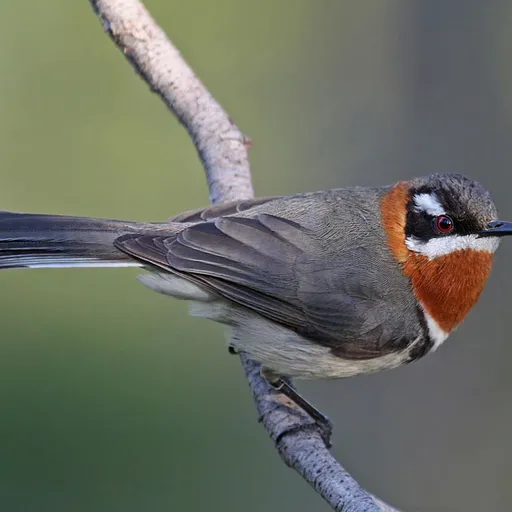
Western Spinebill
Acanthorhynchus superciliosus
Least Concern
Overview
The western spinebill (Acanthorhynchus superciliosus) is a small honeyeater endemic to the heath and woodland of south-western Australia. It is a monotypic species that is locally nomadic and classified as Least Concern on the IUCN Red List.
Identification
- Ranges 12–16 cm in length and weighs approximately 8–11 g.
- Males have a black head with a white eyebrow and mask, a chestnut nape, and a black band between the chestnut breast and buff abdomen.
- Females are plainer with a pale rufous nape and lack the male's distinct banding.
- Possesses a long, slender, curved bill and emits a high, shrill, staccato piping sound described as 'kleet-kleet'.
Habitat
Endemic to the southwestern corner of Western Australia, ranging from north of Jurien Bay to Israelite Bay and inland to an arc described by Moora, Corrigin, and Lake Grace. It is common in the understorey of heaths, coastal scrub, woodlands, forest, and Banksia thickets.
Diet
Feeds primarily on nectar, specifically foraging on lower shrubs such as Banksia, Dryandra, Grevillea, Adenanthos, and Verticordia, as well as from Eucalyptus and herbs like Anigozanthos. It also captures insects in the air or on plants, feeding for longer periods in the first 60 to 90 minutes of each day.
Did you know?
With their long curved bills, western spinebills are the only honeyeaters able to gain nectar out of tube-like flowers.
Sources
- Wikipedia · CC BY-SA 4.0
- Wikidata · CC0 1.0