
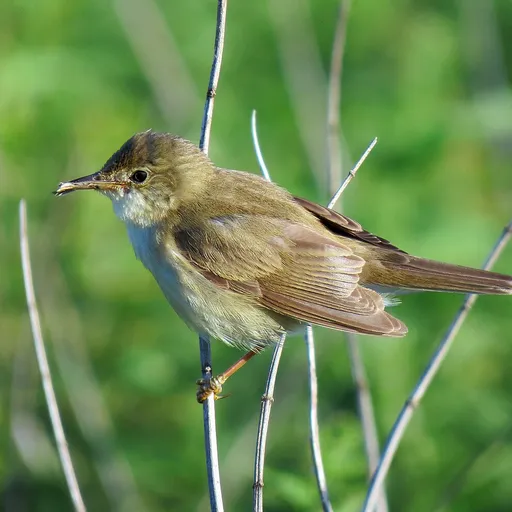
Marsh Warbler
Acrocephalus palustris
Least Concern
Listen
XC707349 · Sonothèque ADVL · Lillemer, Ille-et-Vilaine, Bretagne, France · CC0 1.0
Overview
The marsh warbler (Acrocephalus palustris) is an Old World warbler classified in the family Acrocephalidae. It breeds in temperate Europe and western Asia, and winters mainly in southeast Africa. The species is currently categorized as Least Concern on the IUCN Red List.
Identification
- A medium-sized warbler that is very similar in appearance to other acrocephaline warblers, such as the reed warbler.
- The sexes are alike in appearance, making visual identification difficult as it can be easily confused with close relatives.
- The male's highly distinctive song incorporates striking imitations of a wide variety of other birds, which is a key field mark for identification.
Habitat
In western Europe, it breeds mainly in rank vegetation on damp or seasonally flooded soils, often attracted to tall herbaceous plants and young osiers. In the eastern part of its range, it occupies dry hillsides with shrubs and open woodland. During winter, it inhabits well-vegetated areas in southeast Africa, ranging from moist scrub to woodland edges.
Diet
This bird is mostly insectivorous, though it also consumes spiders, small numbers of snails, and occasionally berries in autumn. It generally gleans insects from vegetation, but will sometimes catch them on the ground or in mid-air.
Did you know?
On average, each male marsh warbler incorporates imitations of 75 other bird species into its song, including calls from waders, hornbills, and pigeons. This extensive repertoire is learned entirely during the summer the bird is hatched and its first winter in Africa, with no new calls added in subsequent years.
Sources
- Wikipedia · CC BY-SA 4.0
- Wikidata · CC0 1.0