
Mallard
Anas platyrhynchos
Least Concern
Listen
XC730554 · Sonothèque ADVL · Jullouville, Manche, Normandie, France · CC0 1.0
Overview
The mallard, or wild duck (Anas platyrhynchos), is a dabbling duck that breeds across the temperate and subtropical Americas, Eurasia, and North Africa. It is a highly adaptable and social species, often forming large flocks, and serves as the main ancestor for most breeds of domestic duck.
Identification
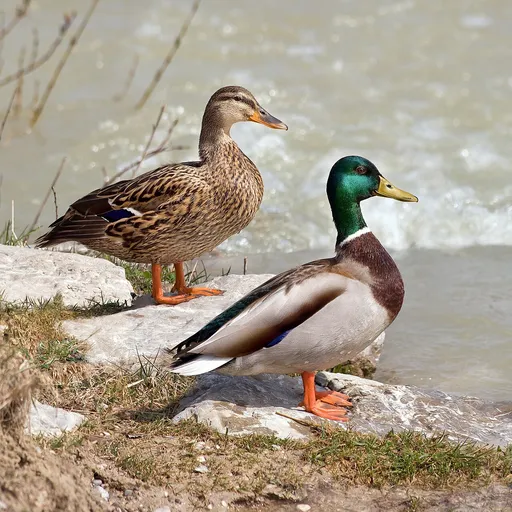
- Males feature a glossy bottle-green head with a white collar, contrasting with a purple-tinged brown breast, grey-brown wings, and pale grey belly, while females display mottled buff and dark brown plumage with a darker crown.
- Both sexes possess distinct iridescent purple-blue speculum feathers edged with white on the wings, which are prominent in flight but shed during the summer moult.
- A medium-large waterfowl weighing 0.7–1.6 kg and measuring 50–65 cm in length, with a bill ranging from 4.4 to 6.1 cm.
- A noisy species where females produce the deep quack associated with ducks, often in sequences of 2–10 calls that decrease in volume, while males make a deeper and quieter quack; urban populations may be louder than rural ones.
Habitat
Widely distributed across the Northern and Southern Hemispheres, the mallard inhabits a variety of climates from Arctic tundra to subtropical regions. It prefers fresh- and salt-water wetlands such as parks, ponds, rivers, lakes, and estuaries, typically avoiding water deeper than 0.9 metres and seeking areas with aquatic vegetation.
Diet
Omnivorous and flexible, the mallard’s diet consists of plant matter, seeds, roots, and tubers, as well as animal matter including gastropods, insects, crustaceans, and worms. It usually feeds by dabbling for plant food or grazing, though it has been observed consuming amphibians, fish, and even the chicks of small migratory birds.
Did you know?
Mallards can undergo spontaneous sex reversal, often due to damaged or nonfunctioning sex organs, which may cause females to exhibit male plumage. This species is also considered an invasive in some regions, where it can interbreed with indigenous wild ducks and cause genetic pollution that threatens local gene pools.
Sources
- Wikipedia · CC BY-SA 4.0
- Wikidata · CC0 1.0