
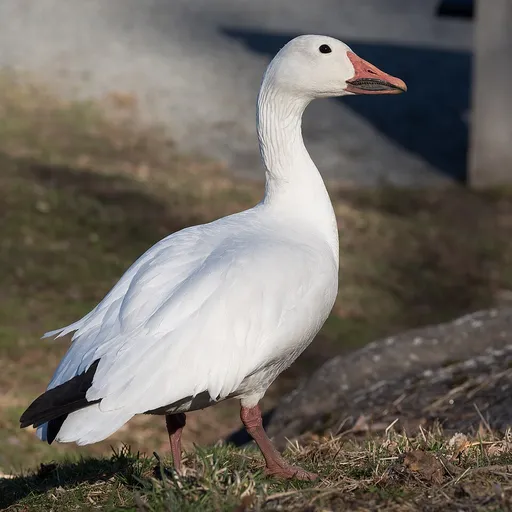
Snow Goose
Anser caerulescens
Least Concern
Overview
The snow goose (Anser caerulescens) is a species of goose native to North America that exists in both white and dark blue-grey plumage morphs. It is currently classified as Least Concern on the IUCN Red List, though its population has increased significantly, leading to habitat degradation in breeding and wintering areas.
Identification
- White-morph birds are white except for black wing tips, while blue-morph birds have bluish-grey plumage replacing the white on the body, except for the head, neck, and tail tip.
- Both morphs possess rose-red feet and legs, along with pink bills featuring black cutting edges that create a distinct black 'grin patch'.
- The lesser snow goose stands 64 to 79 cm tall and weighs 2.05 to 2.70 kg, whereas the greater snow goose averages about 3.2 kg and 79 cm in height.
- Very vocal birds that can often be heard from more than a mile away.
Habitat
Snow geese breed north of the timberline in Greenland, Canada, Alaska, and the northeastern tip of Siberia. They spend the winter in warm parts of North America, ranging from southwestern British Columbia through the United States to Mexico. The lesser snow goose winters primarily on the Gulf coastal plain, while the greater snow goose winters on the Atlantic coastal plain.
Diet
Outside of the nesting season, snow geese feed in flocks on left-over grain in fields and traditionally used their short, strong bills to dig up the roots of marsh grasses in coastal areas. They have shifted inland towards agricultural areas in recent decades.
Did you know?
Snow geese have been observed nesting near snowy owl nests, and scientists believe the owls' predatory presence keeps competing predators away, thereby increasing the geese's nesting success.
Sources
- Wikipedia · CC BY-SA 4.0
- Wikidata · CC0 1.0