
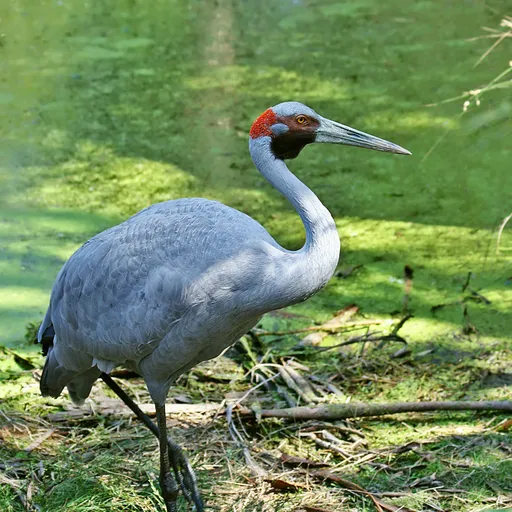
Brolga
Antigone rubicunda
Overview
The brolga (Antigone rubicunda), also known as the native companion or Australian crane, is a large, gregarious bird in the crane family. It is the heaviest flying bird regularly found in mainland Australia, averaging slightly more in body mass than the black swan, Australian pelican, and the local race of the sarus crane.
Identification
- Tall, upright build with a long, slender neck and stilt-like, greyish-black legs.
- Silvery-grey body plumage with black primary wing feathers; the head features a grey-green, skin-covered crown and coral-red, featherless face and throat.
- Distinguished from the similar sarus crane by having red head-colouring confined strictly to the head, a more silvery-grey body, blackish legs, and lower-pitched trumpeting and grating calls.
Habitat
Widespread across tropical and south-eastern Australia and New Guinea, inhabiting freshwater marshes, shallow lakes, wet meadows, and farmlands. The breeding season is determined by rainfall rather than a specific time of year, with northern populations breeding in the wet season and southern populations breeding in spring.
Diet
An omnivore that forages in wetlands, saltwater marshes, and agricultural lands by tearing up the ground with powerful beaks to find bulbs and edible roots. Its diet is diverse and includes plant matter, cereal grains, seeds, insects, mollusks, crustaceans, frogs, and lizards.
Did you know?
The species was the only crane thought to exist in Australia until 1961, when the sarus crane was finally located in Queensland. The brolga is the heaviest flying bird regularly found on the mainland, rivaling black-necked storks and sarus cranes as the tallest flyers in the country.