
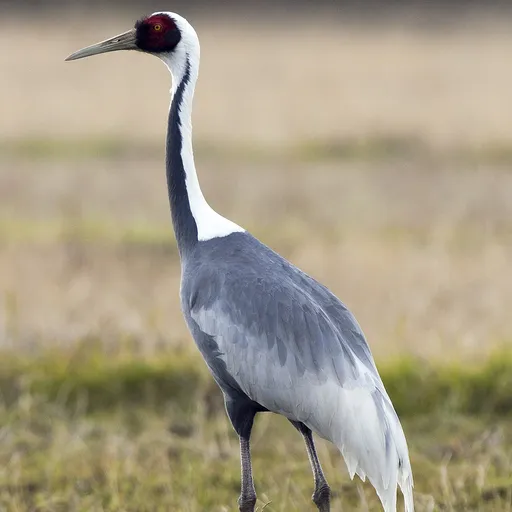
White-naped Crane
Antigone vipio
Listen
XC933637 · Jochem Verweij · Binder, Khentii, Mongolia · CC BY-SA 4.0
Overview
The white-naped crane (Antigone vipio) is a large crane found in northeastern Asia. It is listed as vulnerable on the IUCN Red List, with an estimated 3,700 to 4,500 mature individuals remaining in the wild as of 2018.
Identification
- Measures 112–125 cm in length, stands about 130 cm tall, and weighs approximately 5.6 kg.
- Features a grey body, a white throat, and a distinctive white strip running from the crown down the nape, which distinguishes it from similar species.
- Possesses a reddish face patch and pinkish legs.
- Emits a variety of calls, including growling contact calls, high-pitched short-range calls, and loud aggressive or flight intention calls that differ between sexes.
Habitat
Breeds in shallow wetlands and wet meadows in northeastern Mongolia, northeastern China, and adjacent areas of southeastern Russia. Generally found along lake edges, river valleys, mixed forest grasslands, or lowlands. Western populations migrate to Poyang Lake in China, while eastern populations migrate through Korea, with some wintering in the Korean Demilitarized Zone or the island of Kyūshū in Japan.
Diet
During the breeding season, its diet consists mainly of wetland plants, tubers, and roots. While wintering or migrating, it feeds on rice, cereal grains, and waste grain. It forages by standing in place and digging for deeper vegetation, a behaviour that allows it to coexist with the red-crowned crane without direct competition.
Did you know?
In captivity, hatchlings can imprint on humans, leading them to reject same-species mates and prefer human company, as famously demonstrated by a crane named Walnut who bonded with her keeper for two decades.