
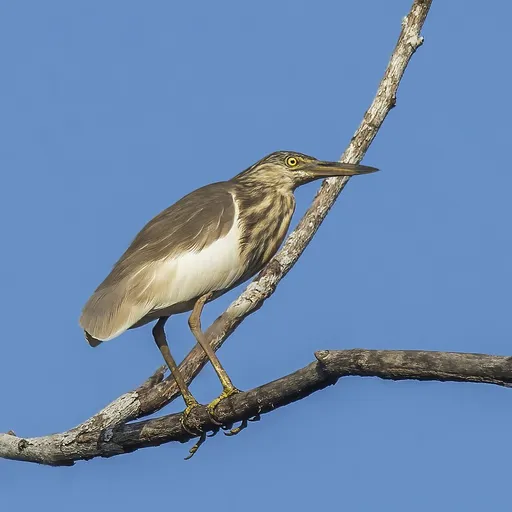
Indian Pond Heron
Ardeola grayii
Least Concern
Overview
The Indian pond heron, or paddybird (Ardeola grayii), is a small heron of Old World origins that is widespread and common across southern Iran, the Indian subcontinent, Burma, and Sri Lanka. Despite their abundance, they are often easily missed due to their exceptional camouflage when stalking prey or roosting near human habitations.
Identification
- Stocky body with short necks, short thick bills, and buff-brown backs, often featuring long neck feathers in summer.
- Dull, cryptic streaked olive and brown plumage that contrasts sharply with bright white wings when taking off.
- Usually silent but may produce a harsh croak in alarm when flushed or near nests.
Habitat
They are found in marshy wetlands, frequently feeding at the edges of ponds and utilising floating vegetation such as water hyacinth to access deeper water. They sometimes forage in dry grasslands, well-watered lawns, or even garbage heaps, and form communal roosts in avenue trees over busy urban areas.
Diet
Their primary diet consists of crustaceans, aquatic insects, fishes, tadpoles, and sometimes leeches, while outside wetlands they consume insects like crickets, dragonflies, and bees. They employ various foraging strategies, including swimming, fishing from the air, driving prey towards the shore by flying low, and even using bread crumbs as bait to attract fish.
Did you know?
Their habit of standing still and flushing only at the last moment has led to widespread folk beliefs that they are semi-blind, resulting in the Sinhala name 'kana koka', which translates to 'half-blind heron'.
Sources
- Wikipedia · CC BY-SA 4.0
- Wikidata · CC0 1.0