
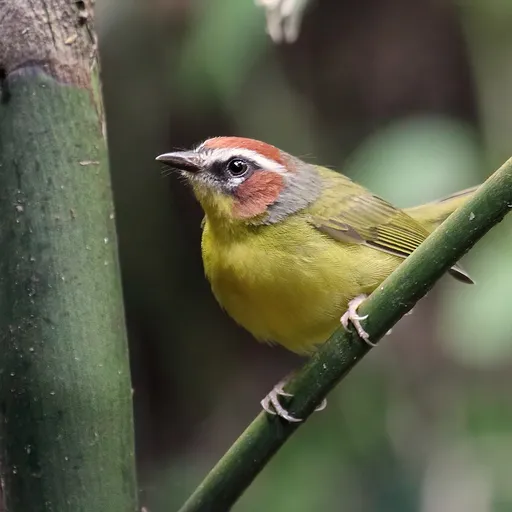
Chestnut-capped Warbler
Basileuterus delattrii
Overview
The Basileuterus delattrii is a species of New World warbler characterised by a complex taxonomic history, having recently been split from the rufous-capped warbler by several major authorities. It is a sedentary resident found across Central America and parts of northern South America.
Identification
- A 13 cm warbler with a chestnut crown and ear coverts in the nominate subspecies, contrasting with a long white supercilium, black lores, and a white spot under the eye.
- Underparts are mostly golden yellow with an olive-buff wash on the flanks, vent, and undertail coverts, while the upperparts are olive and the wings and tail are dusky gray.
- Possesses a dark iris, a blackish bill, and pinkish legs and feet, with males and females sharing the same plumage.
- The song is described as a fast, dry series of jumbled notes that often runs into a trill, and the call is an emphatic, metallic plik or chink.
Habitat
Native to a disjunct range from Guatemala through to Colombia and Venezuela, this bird inhabits dry to moist deciduous woodlands, young secondary forest, and the edges of denser forests. It also frequents shade coffee plantations and occupies elevations from sea level up to 2,200 m in Colombia, with specific ranges varying by location.
Diet
The chestnut-capped warbler is primarily insectivorous, feeding on insects and other invertebrates, though it occasionally consumes small numbers of berries. It forages deliberately by gleaning food from vegetation in the lower to mid-levels of the habitat.
Did you know?
Females undertake the majority of nest construction, building domed cups with a side entrance that are carefully concealed beneath shrubs, below rocks, or under leaf litter, with males providing only minor contributions.