
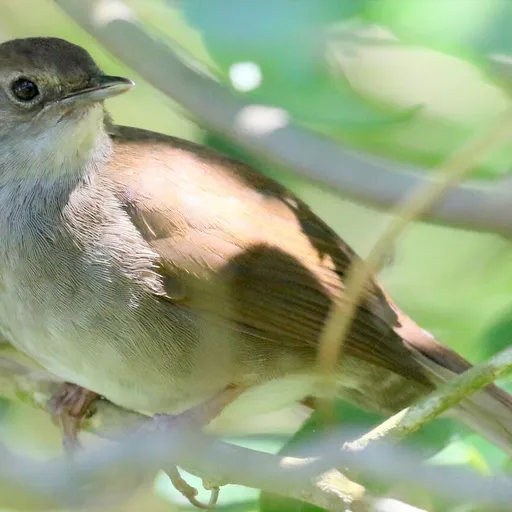
Knysna Warbler
Bradypterus sylvaticus
Near Threatened
Overview
The Knysna warbler (Bradypterus sylvaticus), also known as the Knysna scrub warbler, is a very shy and cryptic bird species endemic to the coastal regions of South Africa. Its population is small and likely declining due to habitat fragmentation and limited reproductive ability.
Identification
- Brown upperparts with an olivaceous tinge on the wings and tail, contrasting with a paler olivaceous brown underside that is whitish on the belly centre.
- Chin and throat are olivaceous brown, mottled whitish and finely streaked.
- Relatively short and square tail.
- Brown eye, bill, legs, and feet, with the lower mandible being paler and horn-coloured.
- Distinctive 'tabirr' call and a fine, accelerating trilled song.
Habitat
This species inhabits dense, tangled scrub and forest edges near the coast, though it has adapted to non-native bramble thickets and suburban riparian woodland. It occurs along the coastlines of the southern Western Cape and Eastern Cape, marginally in KwaZulu-Natal, and in specific locations such as Table Mountain and the Langeberg.
Diet
The reference material does not explicitly state what the Knysna warbler eats, only that it may frequently forage on the ground and stay near the base of vegetation.
Did you know?
The species may be highly philopatric, as one of three colour-ringed nestlings was observed occupying its parent territory a year after fledging.
Sources
- Wikipedia · CC BY-SA 4.0
- Wikidata · CC0 1.0