
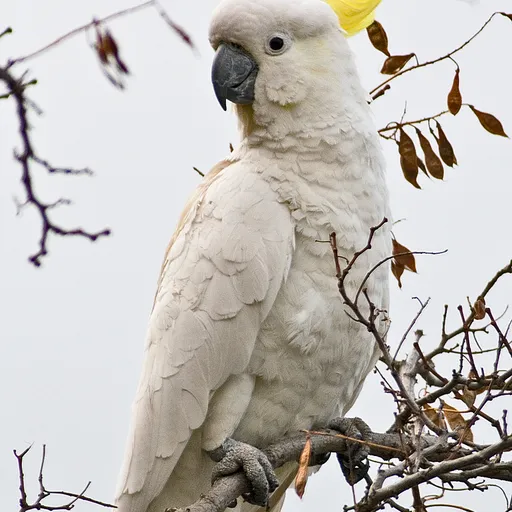
Sulphur-crested Cockatoo
Cacatua galerita
Least Concern
Overview
The sulphur-crested cockatoo (Cacatua galerita) is a relatively large white cockatoo found in wooded habitats across Australia, New Guinea, and parts of Indonesia. Classified as Least Concern on the IUCN Red List, these highly intelligent birds are often considered pests in areas where they are locally very numerous.
Identification
- Length of 44–55 cm, with the overall plumage being white and the underwing and tail tinged yellow.
- Distinctive expressive yellow crest, black bill, grey legs, and a whitish eye-ring.
- Males typically have almost black eyes, whereas females possess red or brown eyes, though this distinction requires optimum viewing conditions.
- Distinctive, raucous, and very loud calls adapted for travel through forest environments.
Habitat
Native to large parts of Australia, Indonesia, and Papua New Guinea, the species inhabits wooded habitats including tropical and subtropical rainforests. They have also successfully adapted to urban areas in Australia and have been introduced to various locations including Perth, Singapore, Palau, New Zealand, and Hawaii.
Diet
While foraging on the ground makes them vulnerable to predators, they mitigate this risk by having at least one bird keep guard from a high tree whenever a flock is on the ground. They are known to open garbage bins as a food source in Sydney, spreading this behaviour by imitation, and occasionally engage in geophagy by eating clay to detoxify their food.
Did you know?
These birds produce a very fine powder to waterproof themselves instead of oil, a trait used by many other birds. A 2009 study involving a cockatoo named Snowball demonstrated that the species is capable of synchronising movements to a musical beat, effectively dancing to music with unique moves.
Sources
- Wikipedia · CC BY-SA 4.0
- Wikidata · CC0 1.0