
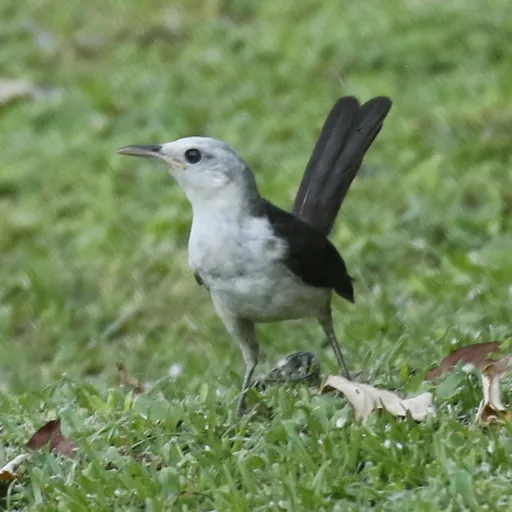
White-headed Wren
Campylorhynchus albobrunneus
Least Concern
Overview
The white-headed wren, Campylorhynchus albobrunneus, is a bird species in the family Troglodytidae found in Colombia and Panama. It is assessed by the IUCN as being of Least Concern, with a population that appears stable.
Identification
- Measures 18.5 cm in length and weighs between 27.5 and 39 g.
- Features a striking two-tone plumage with a pure white head, nape, and underside contrasted against dull blackish brown upperparts.
- Produces a song described as a series of harsh scratchy notes and a call sounding like a harsh 'kahk'.
- The harterti subspecies is distinguished by darker upperparts compared to the nominate form.
Habitat
This species inhabits both pristine and disturbed humid forests characterised by epiphytes, ranging in elevation from sea level to 1,500 m. The nominate subspecies is restricted to Panama, while the harterti subspecies ranges from eastern Darién through western Colombia towards Ecuador.
Diet
The diet includes beetles, ants, and other insects. The bird forages primarily in the middle to upper levels of the forest, frequently investigating epiphytes, and often does so in small groups that are likely extended families.
Did you know?
It is unique among wrens for having essentially only two colours in large blocks. Its globular nests, which have a side entrance, are sited in epiphytes.
Sources
- Wikipedia · CC BY-SA 4.0
- Wikidata · CC0 1.0