
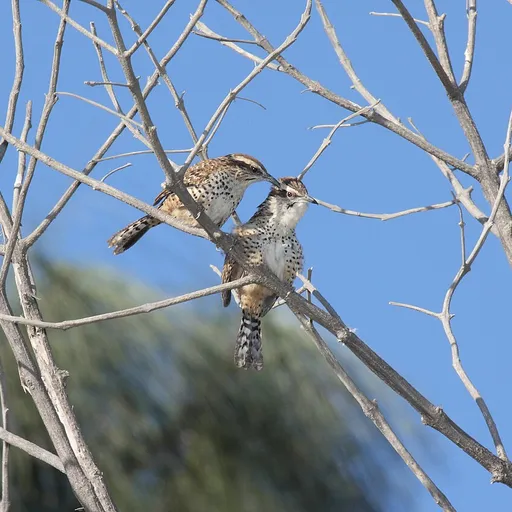
Spotted Wren
Campylorhynchus gularis
Least Concern
Overview
The spotted wren (Campylorhynchus gularis) is a species of bird in the family Troglodytidae that is endemic to Mexico. It is currently assessed as a species of Least Concern on the IUCN Red List, with abundance varying significantly across its range.
Identification
- Adults feature a chestnut crown and rufescent brown shoulders and back with dull black and buffy markings, while the tail is gray-brown with darker bars.
- A distinct white supercilium and brown eyestripe sit above buffy white cheeks, complemented by an off-white chest with blackish spots on the sides.
- The bird is 17 cm long and weighs between 28.3 and 31 g, with juveniles distinguished by a dull black crown and unspotted, pale buff chest.
- Vocalisations consist of harsh churring notes and unmusical gurgling phrases, alongside a gruff call described as "cheh-cheh-cheht".
Habitat
Found in two distinct areas of Mexico, the species inhabits a variety of environments including dry oak and pine-oak woodlands, stands of shrubs and cactus, and rocky slopes with palms. It generally occupies elevations between 800 and 2,500 m, though it may reach up to 3,000 m in Colima.
Diet
Foraging actively in small groups on or near the ground, the spotted wren probes bark crevices, epiphytes, and among rocks to capture invertebrates. Its diet also includes vegetable matter such as cactus seeds, and the bird has been observed preying on small lizards.
Did you know?
Although its breeding phenology is virtually unknown, the spotted wren builds a domed nest with a side entrance and typically lays a clutch of two to four eggs.
Sources
- Wikipedia · CC BY-SA 4.0
- Wikidata · CC0 1.0