
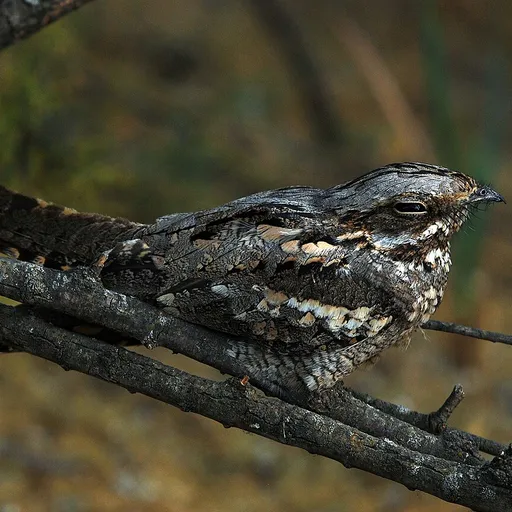
European Nightjar
Caprimulgus europaeus
Least Concern
Listen
XC732175 · Sonothèque ADVL · Jullouville, Manche, Normandie, France · CC0 1.0
Overview
The European nightjar (Caprimulgus europaeus) is a crepuscular and nocturnal bird that breeds across most of Europe and the Palearctic, with populations migrating to sub-Saharan Africa for the winter. Its generic name references an old myth that the bird suckled from goats, while its common name derives from its distinctive churring song.
Identification
- Measures 24.5–28 cm in length with a 52–59 cm wingspan.
- Features densely patterned grey and brown plumage that renders it nearly invisible during the day when resting on the ground or perching motionless.
- Males display white patches on the wings and tail during flight, whereas females show no white markings.
- The male produces a sustained churring trill from a perch, often accompanied by wing-clapping sounds produced in a whiplash-like motion.
Habitat
The species favours dry, open country with some trees and small bushes, such as heaths, commons, moorland, forest clearings, and newly planted woodland. It avoids heavily wooded areas, cities, and mountains, although it may feed over wetlands or cultivation. In wintering regions, it utilises a wider range of open habitats including acacia steppe, sandy country, and highlands.
Diet
It feeds on a wide variety of flying insects, including moths, beetles, mantises, dragonflies, and flies, which it seizes in flight or catches from a perch. Hunting is conducted by sight, silhouetting prey against the night sky, and it occasionally picks glowworms from vegetation. The bird consumes grit to aid digestion and drinks by dipping to the water surface in flight.
Did you know?
The common name 'nightjar' first recorded in 1630, derives from the bird's nocturnal habits and its distinctive churring song, which can be confused with the sound of a European mole cricket. The scientific name Caprimulgus stems from a myth that these birds suck milk from goats, causing them to cease milk production.
Sources
- Wikipedia · CC BY-SA 4.0
- Wikidata · CC0 1.0