
Southern Cassowary
Casuarius casuarius
Least Concern
Overview
The Casuarius casuarius, also known as the double-wattled cassowary, is a large, flightless bird that ranks among the heaviest living species. It is a ratite found in the tropical forests of Indonesia, Papua New Guinea, and northeastern Australia.
Identification
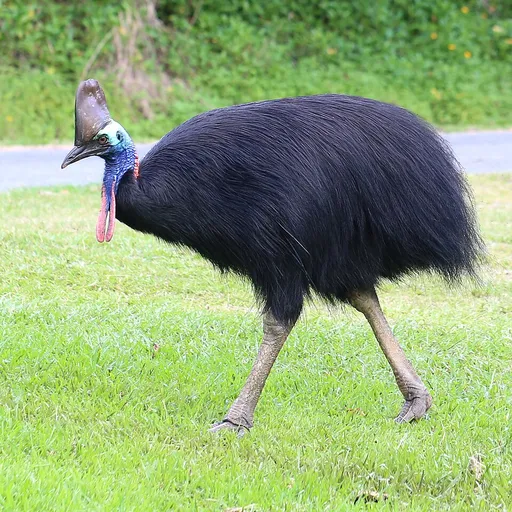
- Stiff, bristly black plumage in adults, while juveniles have soft, fuzzy, striped feathers and immatures possess hair-like brown plumage.
- A blue face and long neck featuring red wattles that can measure up to 18 cm in length, along with a red cape.
- A prominent brown, horn-like casque on the head, ranging from 13 to 20 cm in height.
- Three-toed feet with thick, powerful legs and a lethal dagger-like inner claw up to 12 cm long.
Habitat
This species primarily inhabits tropical rainforests, though it may utilise nearby savannah forests or mangrove stands. It generally prefers elevations below 1,100 m in Australia and below 500 m in New Guinea.
Diet
Foraging on the forest floor, this bird feeds on fallen fruit and seeds, including those toxic to other animals, as well as fungi, insects, small vertebrates, and carrion. When food is scarce, it has been observed ingesting earth to seek supplementary minerals.
Did you know?
In 2026, it was discovered that the casques of southern cassowaries glow under ultraviolet light, displaying patterns distinct from those of northern cassowaries.
Sources
- Wikipedia · CC BY-SA 4.0
- Wikidata · CC0 1.0