
Ruddy-capped Nightingale-Thrush
Catharus frantzii
Least Concern
Overview
The ruddy-capped nightingale-thrush (Catharus frantzii) is a thrush species native to Mexico and Central America. It is a member of the family Turdidae and is found across a range extending from Mexico to Panama.
Identification
- Measures 15 to 18 cm in length and weighs approximately 30 g.
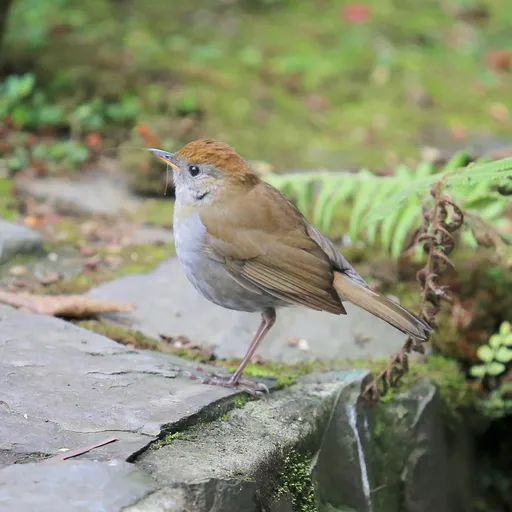
- Adults possess a rich rufous-brown to russet crown, a grayish face, and brownish-olive back with a russet wash.
- The underside features a pale gray, dark-flecked breast and whitish belly, while the tail is deep rufous-brown.
- Song consists of ethereal, melancholic, and liquid phrases with fluty trills and clear whistles.
Habitat
This bird primarily inhabits montane evergreen forests and pine-oak forests in subtropical and lower temperate zones, often near secondary forests and thickets. It ranges in elevation mostly between 1,200 and 3,100 m, with specific variations across its disjunct distribution in Mexico and Central America.
Diet
The ruddy-capped nightingale-thrush feeds primarily on insects, other invertebrates, and berries. It forages singly or in pairs on the ground and in the forest undergrowth, and has been observed following army ant swarms as well as feeding on small frogs.
Did you know?
The species' scientific name commemorates the German naturalist Alexander von Frantzius. In Mexico and El Salvador, it is deemed endangered despite its overall IUCN status of Least Concern.
Sources
- Wikipedia · CC BY-SA 4.0
- Wikidata · CC0 1.0