
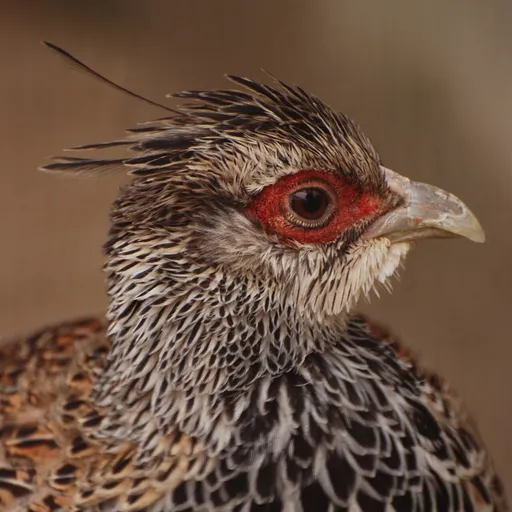
Cheer Pheasant
Catreus wallichii
Vulnerable
Overview
The cheer pheasant, also known as Wallich's pheasant or chir pheasant, is a vulnerable species and the sole member of the genus Catreus. It is classified as vulnerable on the IUCN Red List due to habitat loss, small population size, and hunting pressures.
Identification
- Buffy gray plumage with long, gray crests that contrast notably with the brilliant colours of other pheasants.
- A long tail consisting of 18 feathers, with central feathers being significantly longer and predominantly gray and brown.
- Females are slightly smaller than males and possess darker plumage with a white collar limited to the chin and throat.
Habitat
Distributed across the highlands and scrublands of the Himalayas in India, Nepal, and Pakistan, specifically in regions such as western Nepal, Uttarakhand, Himachal Pradesh, Jammu and Kashmir, and northern Pakistan. The species typically resides at altitudes above 6000 feet, reaching up to 10000 feet during the summer months.
Did you know?
Reintroduction efforts using captive-bred cheer pheasants in Pakistan have been unsuccessful. Males are monogamous and breed on steep cliffs, producing a clutch of 10 to 11 eggs during the summer.
Sources
- Wikipedia · CC BY-SA 4.0
- Wikidata · CC0 1.0