
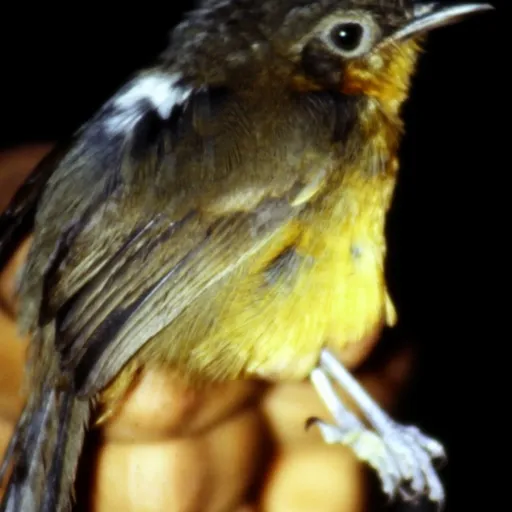
Parker's Antbird
Cercomacroides parkeri
Least Concern
Overview
Parker's antbird (Cercomacroides parkeri) is a passerine bird in the family Thamnophilidae, endemic to Colombia. It is a monotypic species that resides in humid subtropical montane forests and is currently classified as Least Concern by the IUCN, despite a believed decreasing population.
Identification
- Males are almost entirely slate gray with lighter underparts, while females feature olive brown or cinnamon rufous underparts and an olive brown crown.
- Both sexes possess a rich chocolate brown iris, a brownish black maxilla, and horn-colored mandible with a brownish black tomium.
- The male song consists of a muted note followed by higher-pitched, more intense series that flatten, descend, and accelerate as the final notes shorten.
Habitat
Found on the western slope of Colombia's Western Andes and the slopes of the Central and Eastern Andes, the bird inhabits the understorey, edges, and bamboo thickets of humid subtropical montane and secondary forests. Its elevation range spans between 1,100 and 1,950 m.
Diet
The diet includes a variety of insects, with a particular preference for beetles. Foraging typically occurs low to the ground by gleaning from a perch or hopping through dense vegetation, and the bird seldom joins mixed-species feeding flocks.
Did you know?
The species was formally described in 1997 to honour Theodore A. Parker III, who is remembered as "the most talented field ornithologist of our generation".
Sources
- Wikipedia · CC BY-SA 4.0
- Wikidata · CC0 1.0