
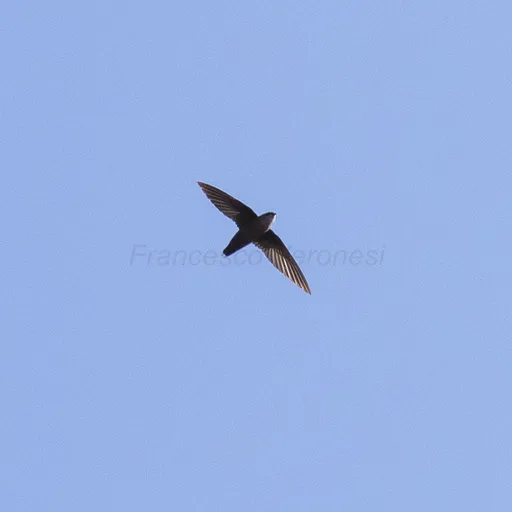
Vaux's Swift
Chaetura vauxi
Least Concern
Overview
Vaux's swift (Chaetura vauxi) is a small swift native to North America, Central America, and northern South America, named after the American scientist William Sansom Vaux. It is listed as a species of Least Concern by the IUCN Red List.
Identification
- Size: 10.7 to 11.2 cm in length, weighing approximately 18 g, with northern populations reaching 11.5 cm.
- Plumage: Dusky black head, upperparts, and wings, contrasting with greyish brown underparts, rump, and tail coverts; the throat is paler grey, appearing whitish in northern birds.
- Shape: Characterised by a cigar-shaped body, crescentic wings, and a short, bluntly squared-off tail.
- Flight and Sound: Flies using a mix of stiff wing-beats and unsteady glides, producing calls that include chattering, buzzes, squeaks, and chips.
Habitat
This species breeds in highlands ranging from southern Alaska to central California and from southern Mexico to northern Venezuela, favouring old-growth coniferous or deciduous forests. It requires large, hollow trees for nesting and the United States populations are migratory, wintering in central Mexico through Central America.
Diet
Vaux's swift feeds in flight on flying insects, including beetles, wasps, termites, and flying ants. Foraging takes place over forests, open areas, and towns.
Did you know?
Thousands of swifts gather in the sky over Chapman Elementary School in Portland, Oregon, to roost in a brick chimney, forming living tornados during the autumn migration. This roosting behaviour began in the early 1980s as birds adapted to the loss of natural roosting habitat such as old-growth Douglas-fir and forest snags.
Sources
- Wikipedia · CC BY-SA 4.0
- Wikidata · CC0 1.0