
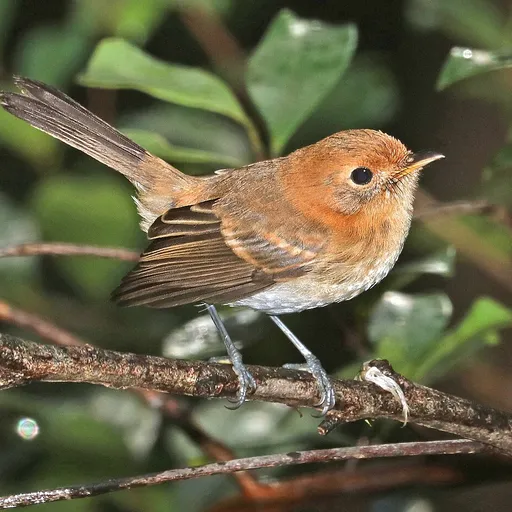
Oahu Elepaio
Chasiempis ibidis
Vulnerable
Overview
The Oʻahu ʻelepaio (Chasiempis ibidis) is a monarch flycatcher endemic to the high elevations of the Hawaiian Island of Oʻahu. It is one of three distinct ʻelepaio species in the archipelago and was reclassified as a separate species from the Hawaiʻi ʻelepaio in 2010 due to morphological, phylogenetic, and vocal differences.
Identification
- Plumage features a rust-coloured upper side, especially on the head, with white wing bars and tail tips.
- The white underside extends further up the breast and to the flanks compared to the Hawaiʻi ʻelepaio.
- Adults have a black or blue chin, sometimes with white, and a medium-sized, blunt black bill.
- Juveniles are more reddish-brown overall and have buffy wing bars.
Habitat
This sedentary species inhabits high-altitude areas on Oʻahu, primarily within dense forest undercover. Its range is restricted to the Koʻolau and Waiʻanae ranges, where it survives in both native old-growth forests and areas with high levels of invasive fauna.
Diet
The Oʻahu ʻelepaio forages in the lower canopy of high-altitude forests, preying on insects, arachnids, chilopods, diplopods, and occasionally mollusks. It is an opportunistic feeder that relies on areas with high insect density and typically remains within its established territory.
Did you know?
The Oʻahu ʻelepaio exhibits a behaviour known as 'anting', rubbing ants or other organisms onto its feathers, which is thought to act as a control for ectoparasites. Notably, this species has been observed anting with two invasive species, the garlic snail and Christmas berry, which contain chemical toxins not found endemically on the island.
Sources
- Wikipedia · CC BY-SA 4.0
- Wikidata · CC0 1.0