
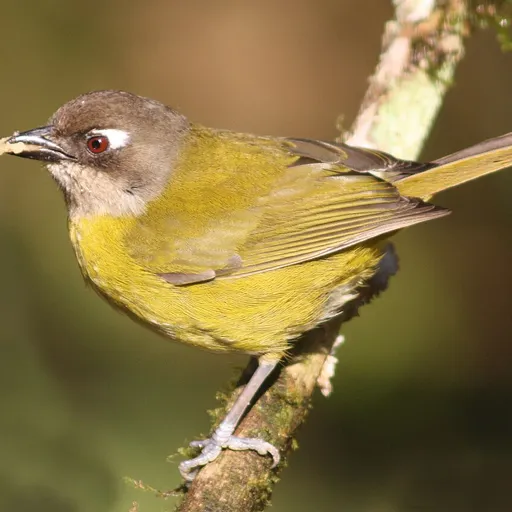
Common Chlorospingus
Chlorospingus flavopectus
Least Concern
Listen
XC250643 · Niels Krabbe · Sucumbíos: La Sofia road, Ecuador · CC BY-SA 4.0
Overview
The common chlorospingus, also known as the common bush tanager, is a small passerine bird found in the highlands of central Mexico through to South America. It is classified as Least Concern on the IUCN Red List but is considered a notorious cryptic species complex, with up to 25 subspecies that may actually represent distinct species.
Identification
- Brown head with a usually thin supercilium, a white spot behind the eye, and a light throat; upperparts are olive while underparts are yellow, becoming white on the belly.
- Adults measure 13.5 cm (5.3 in) in length and weigh approximately 20 g (0.71 oz).
- Head markings, particularly around the cheeks and eye region, vary significantly across the range, but the species generally lacks the bold white supercilium found in the related sooty-capped chlorospingus.
- The call is described as a squeaky tseeet or chit, while songs vary widely between populations, ranging from high, thin phrases to accelerating series of chit notes ending in a churring trill.
Habitat
This species inhabits cloud forests with ample undergrowth and adjacent bushy clearings, typically at altitudes of 400 to 2,300 m in Middle America and 2,000 to 3,500 m near the Equator. It is a resident breeder in the highlands from central Mexico south to Bolivia and north-western Argentina, where it is often encountered in small groups or mixed-species feeding flocks.
Diet
The common chlorospingus feeds on insects, spiders, small fruits, and nectar. It is a rather sedentary bird that is usually encountered in small groups or as part of a mixed-species feeding flock.
Did you know?
A specific species of chewing louse, Myrsidea ophthalmici, was described from a Venezuelan specimen of this bird and is not known to exist on any other host to date.
Sources
- Wikipedia · CC BY-SA 4.0
- Wikidata · CC0 1.0