
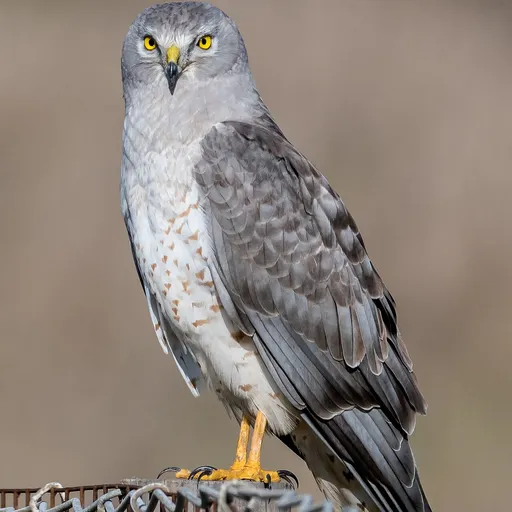
Northern Harrier
Circus hudsonius
Least Concern
Overview
The northern harrier (Circus hudsonius), also known as the marsh hawk or ring-tailed hawk, is a medium-sized bird of prey that breeds throughout the northern parts of the Northern Hemisphere. It is currently classified as Least Concern on the IUCN Red List, despite evidence of population decline.
Identification
- Length of 41–52 cm with a wingspan of 97–122 cm, possessing the longest wings and tail relative to body size of any North American raptor.
- Sexes have distinct plumages; adult males are darker grey, earning the nickname "Grey Ghost", while females are darker and more rufous.
- Mostly silent but may emit fast 'kek' notes lasting 1–2 seconds, with females producing loud screams during the mating season.
- Features an owl-like facial disc that supports exceptionally good hearing for a diurnal raptor.
Habitat
The species inhabits prairies, open areas, marshes, moorland, bogs, and farmland coastal prairies across Canada and the northernmost United States. It migrates south in winter to the American south, Mexico, and Central America, though it may be present year-round in the midwestern, mountain west, and north Atlantic states of the U.S.
Diet
The diet consists primarily of small mammals, including voles, cotton rats, and ground squirrels, which make up to 95% of their intake. They also hunt passerines, small shorebirds, amphibians, reptiles, and insects, and have been observed taking bats, rabbits, and adult ducks. Foraging involves flying low to the ground with wings held in a shallow V, using exceptional hearing to locate prey.
Did you know?
Unlike many raptors, northern harriers are often favourably regarded by farmers as "good hawks" because they consume crop-damaging mice and predators of quail eggs without threatening poultry. The species is also polygynous, with up to five females potentially mating with a single male in one season.
Sources
- Wikipedia · CC BY-SA 4.0
- Wikidata · CC0 1.0