
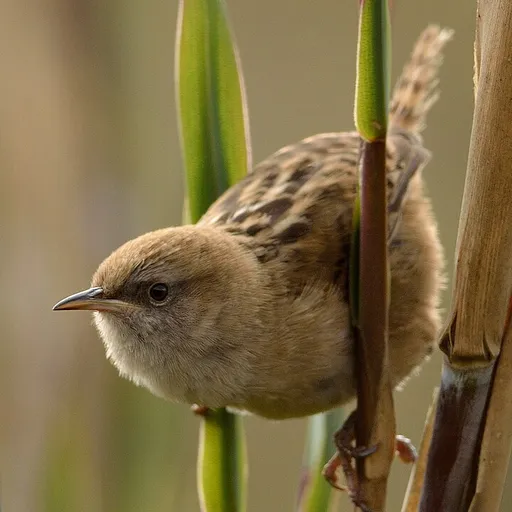
Apolinar's Wren
Cistothorus apolinari
Endangered
Overview
Apolinar's wren (Cistothorus apolinari) is a small passerine bird endemic to Colombia and currently classified as Endangered on the IUCN Red List. The species comprises two subspecies: the nominate found in the Andes of Cundinamarca and Boyacá, and C. a. hernandezi, which is restricted to the Sumapaz Massif.
Identification
- Adults measure approximately 12 cm in length, with males weighing around 17.7 g.
- The nominate subspecies features a chestnut crown, blackish brown shoulders with whitish buff streaks, and a bright reddish brown lower back, while C. a. hernandezi has whiter underparts, longer wings, a shorter tail, and a heavier bill.
- The nominate male sings a series of rising and falling churrs mixed with harsh gravelly notes, whereas C. a. hernandezi possesses at least 11 song types and may sing in duet.
Habitat
The nominate subspecies inhabits marshes and lake-edge vegetation, particularly those with Typha cattails and Scirpus bullrushes, at elevations between 2,500 and 3,000 m. In contrast, C. a. hernandezi lives in boggy páramo between 3,800 and 3,900 m, favoring shrubs such as Diplostephium revolutum and Espeletia grandiflora and requiring Chusquea tessellata dwarf bamboo for nesting.
Diet
The species forages by climbing vegetation stems and dropping to near ground or water level. The nominate appears to feed primarily on Chironomus midges, as well as spiders and other adult and larval insects, while details on the diet of C. a. hernandezi remain unpublished.
Did you know?
The common and scientific names of the bird commemorate Brother Apolinar Maria, a Colombian monk and ornithologist, while its Spanish name, cucarachero de pantano, translates literally to 'swamp cockroach hunter'.
Sources
- Wikipedia · CC BY-SA 4.0
- Wikidata · CC0 1.0