
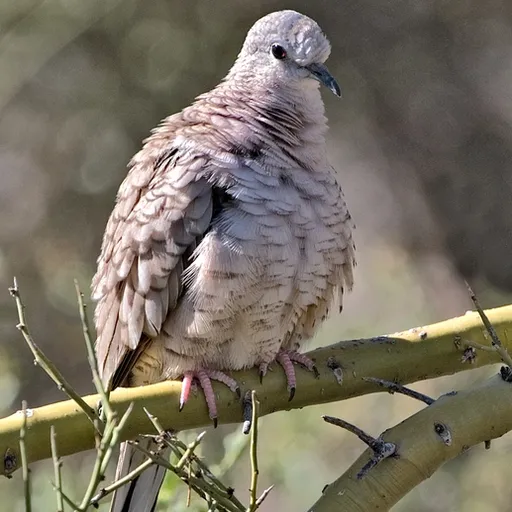
Inca Dove
Columbina inca
Least Concern
Overview
The Inca dove, also known as the Mexican dove, is a small New World dove first described in 1847. It is a slender species characterised by a scaled plumage pattern and a long, square tail. The bird is classified as Least Concern on the IUCN Red List.
Identification
- A slender body with a gray-brown colour and feathers resembling a scaled pattern.
- A long, square tail edged with white that may flare out in flight, with reddish underwings.
- Size ranges from 16.5–23 cm in length with a wingspan of 28.5–32 cm.
- Flight involves a distinctive, quiet rattling noise produced by the wings.
Habitat
The species ranges from Costa Rica in the south to the American Southwest in the north, with its range currently expanding in both directions. It is a terrestrial species that forms flocks in deserts, scrublands, cultivated areas, and urban settings. Although named after the Inca Empire, it does not occur in the lands that once constituted that empire.
Diet
Inca doves feed upon grass seeds. They exploit the ready availability of water from agricultural and suburban irrigation in urban environments.
Did you know?
During winter, these birds roost in communal huddles arranged in a pyramid formation that contains 10 or more birds to aid in body-heat retention. Despite its name, the Inca dove does not occur in the historical territory of the Inca Empire.
Sources
- Wikipedia · CC BY-SA 4.0
- Wikidata · CC0 1.0