
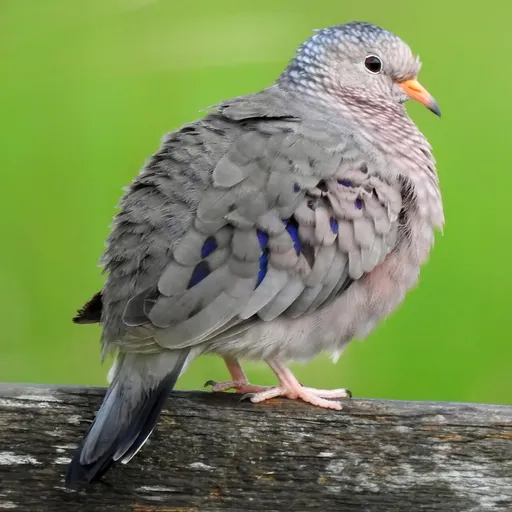
Common Ground Dove
Columbina passerina
Least Concern
Overview
The common ground dove (Columbina passerina) is a small, non-migratory bird found throughout the southern United States, parts of Central America, the Caribbean, and northern South America. It is considered the smallest dove inhabiting the United States and is classified as Least Concern on the IUCN Red List.
Identification
- Ranges from 15–18 cm in length and weighs between 26–40 g.
- Features a yellow beak with a black tip and pink feathers surrounding it.
- Plumage includes brown back with black-spotted wing coverts, a scale-like appearance on the head and upper breast, and chestnut primaries visible only in flight.
- Males have slate-gray heads and pink-gray bellies, whereas females are generally grayer and more evenly coloured.
- Produces a call described as soft whoops that increase in pitch, often heard in repetition.
Habitat
Found in open areas with trees and bushes, forests with sandy patches, farmlands, savannahs, and near human infrastructure. The species is a year-round resident across its range in the southern US, Mexico, Central America, the Caribbean, and northwestern South America.
Diet
A ground gleaner that feeds on vegetation, seeds, fruits, insects, and snails, including their shells. It often continues eating while moving and searching for new food items, and may also visit bird feeders.
Did you know?
Common ground doves can suck water into their beaks and swallow it by lifting their heads, a trait shared with other members of their family. They are monogamous and mate for life.
Sources
- Wikipedia · CC BY-SA 4.0
- Wikidata · CC0 1.0