
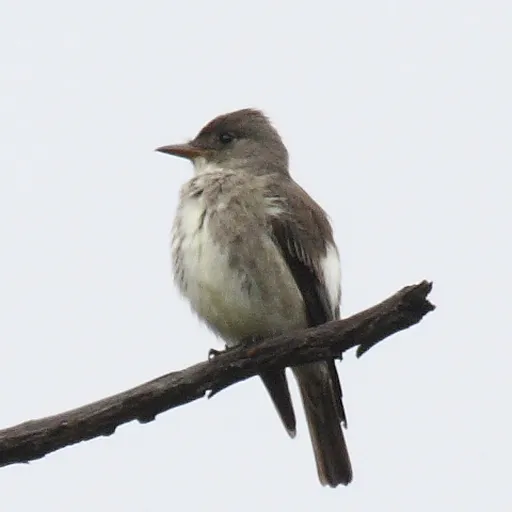
Olive-sided Flycatcher
Contopus cooperi
Least Concern
Listen
XC935026 · Rosa Elena Albornoz · San Antonio De Los Altos (near Parroquia Macarao), Municipio Los Salias, Miranda, Venezuela · CC0 1.0
Overview
The olive-sided flycatcher (Contopus cooperi) is a small to medium-sized passerine bird in the tyrant flycatcher family. It is a migratory species that travels from South America to North America to breed, characterized by its agile flight and insectivorous diet.
Identification
- Olive-grey or grey-brownish plumage above, with a white mid-breast section and throat that gives the appearance of wearing a vest.
- Smaller than an American robin but larger than sparrows, with a relatively long bill and long wings.
- Males sing a distinctive song often described by the mnemonic "Quick, three beers!" consisting of three successive higher-pitched sounds.
- Perches in upright positions on top of dead branches or trees.
Habitat
Breeding habitats range from California and New Mexico to central Alaska, across Canada (except most of the Northwest Territories and Nunavut), and into a portion of the northeastern US. These areas are mainly open or edge habitats of boreal, coniferous, or temperate western forests up to 10,000 feet in elevation, always near water. Non-breeding habitats are found in northern South America and a small area of Central America, including tropical montane and lowland evergreen forests.
Diet
The primary feeding method is hawking, where the bird captures flying insects such as bees, wasps, moths, and beetles in the air. They occasionally consume fruit during migration and the non-breeding season. During parental care, adults also consume the fecal sacs of their chicks to supplement their own nutrition.
Did you know?
Of all flycatcher species breeding in the United States, the olive-sided flycatcher undertakes the longest migration, traveling up to 7,000 miles between central Alaska and Bolivia.
Sources
- Wikipedia · CC BY-SA 4.0
- Wikidata · CC0 1.0