
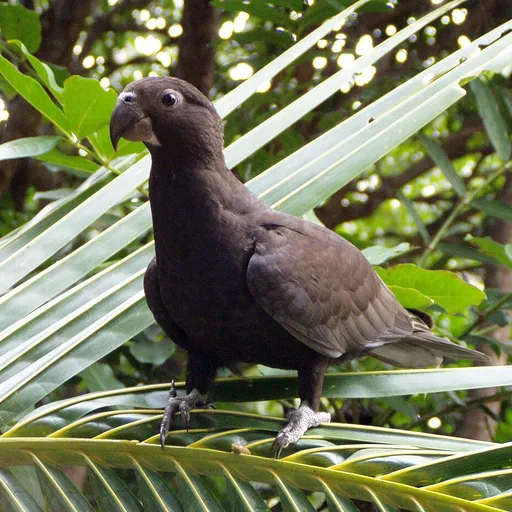
Greater Vasa Parrot
Coracopsis vasa
Least Concern
Overview
The greater vasa parrot is one of two species of vasa parrot, found throughout Madagascar and the Comoros. Classified as Least Concern by the IUCN, the species is common in certain areas, although its overall population is thought to be declining.
Habitat
Found throughout Madagascar and the Comoros, the bird is more common in portions of the dry deciduous forests in Madagascar. It roosts in large, noisy flocks in the tops of large trees and is active on moonlit nights, with a lookout warning of danger.
Diet
It feeds in large, noisy flocks on wild berries, fruits, nuts and seeds, as well as cultivated maize, millet and rice. During the breeding season, females sing complex songs from perches to attract males who approach and regurgitate food.
Did you know?
Greater vasa parrots at Lincolnshire Wildlife Park have been observed using grinding technology, holding date stones and pebbles in their beaks to grind calcium-rich dust from seashells, potentially to help females build eggshells. Males have re-evolved a phallus, and copulations can last up to 90 minutes, with some involving a copulatory tie.
Sources
- Wikipedia · CC BY-SA 4.0
- Wikidata · CC0 1.0