
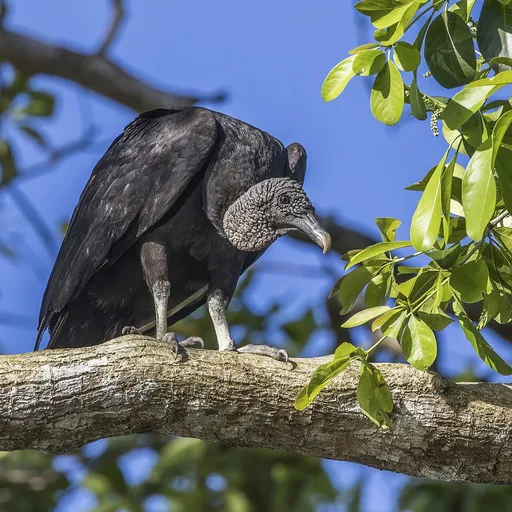
Black Vulture
Coragyps atratus
Least Concern
Overview
The black vulture (Coragyps atratus), also known as the American black vulture, is a fairly large scavenger in the New World vulture family. It is a widespread and common species ranging from the northeastern United States through Central and South America.
Identification
- Glossy black plumage with a featherless, wrinkled, dark grey head and neck.
- Wingspan of 1.33–1.67 m with relatively broad, short wings that display white patches at the bases of the primary feathers in flight.
- A short, hooked beak with perforate nostrils, and greyish-white legs.
- Generally silent, producing only grunts or low hisses when agitated or feeding.
Habitat
This species prefers relatively open areas interspersed with scattered trees, such as chaparral, but also inhabits subtropical forests, moist lowland forests, shrublands, and wetlands. It is usually seen soaring high or perched on fence posts and dead trees throughout its Nearctic and Neotropic range.
Diet
Primarily a scavenger, it feeds on carrion, locating food by keen eyesight or following other vultures that possess a sense of smell. It also opportunisticly consumes eggs, fruit, fish, and dung, and may prey on weakened or newborn livestock such as calves, lambs, and piglets.
Did you know?
The black vulture is the only New World vulture species that preys on cattle, often swarming newborn calves to peck at their eyes and cause shock. It also defecates on its own legs to cool itself through evaporation, a process known as urohidrosis.
Sources
- Wikipedia · CC BY-SA 4.0
- Wikidata · CC0 1.0