
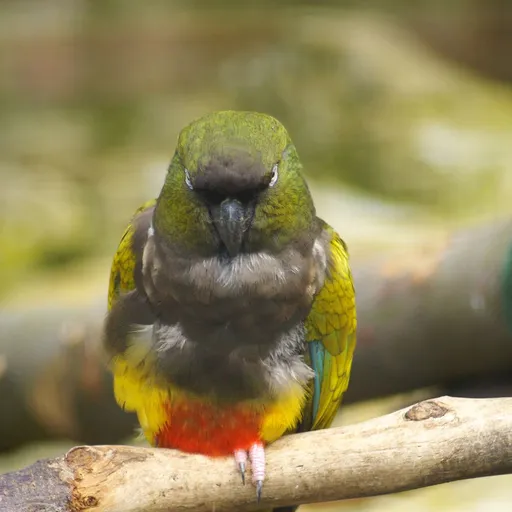
Burrowing Parrot
Cyanoliseus patagonus
Least Concern
Overview
The burrowing parrot, also known as the burrowing parakeet or Patagonian conure, is a species of parrot native to Argentina and Chile. It belongs to the monotypic genus Cyanoliseus and is the largest member of the group of New World parakeet species commonly known as conures.
Identification
- Adults measure 39–52 cm in length with a long, graduated tail ranging from 21 to 26 cm.
- Plumage features an olive-brown head and upper back, grey-brown throat and breast with a variable whitish pectoral marking, and olive green wing coverts.
- Distinctive bright underparts include orange-red lower thighs and abdominal centre, with yellow lower back, upper thighs, rump, vent, and flanks.
- Possesses a bare white eye ring and post-ocular patch, a grey bill, yellow-white iris, and pink legs.
Habitat
This species prefers dry, open country, particularly near water courses up to 2000 m in elevation, including montane grassy shrubland, Patagonian steppes, arid lowland, woodland savanna, and the plains of the Gran Chaco. They may also inhabit farmland and the edges of urban areas. Their range covers much of Argentina and isolated populations in central Chile, with seasonal migrations occurring in southern Argentina and vertical movements in Chile to avoid colder altitudes.
Diet
The diet consists of seeds, berries, fruits, and possibly vegetable matter, with foraging occurring on the ground or in trees and shrubs. Fruit consumption peaks during the Argentine summer, with specific feeds including red crowberry, Chilean palo verde, Lycium salsum, pepper trees, and cacti. In winter, they feed predominantly on seeds from cultivated crops and wild plants such as thistles, Patagonian oak, and Cordia decandra.
Did you know?
Burrowing parrots excavate elaborate burrows in cliff faces that can reach depths of up to 3 m, often connecting with other tunnels to create a labyrinth ending in a nesting chamber. These structures are typically reused by breeding pairs from year to year, sometimes being enlarged to accommodate the family.
Sources
- Wikipedia · CC BY-SA 4.0
- Wikidata · CC0 1.0