
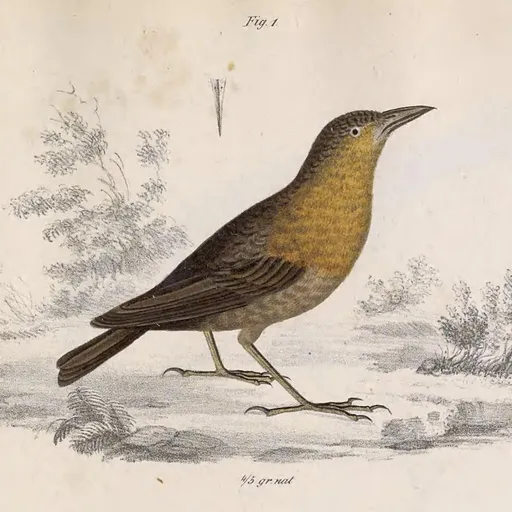
Southern Chestnut-breasted Wren
Cyphorhinus thoracicus
Least Concern
Listen
XC1077359 · Manuela Zapata · SFF. Otún Quimbaya, Pereira, Risaralda, Colombia · CC BY-SA 4.0
Overview
The southern chestnut-breasted wren (Cyphorhinus thoracicus) is a species of passerine bird in the wren family Troglodytidae. It is found in southern Peru and the extreme northwest of Bolivia and is currently classified as Least Concern by the IUCN.
Identification
- 11.5 to 15 cm in length with a weight between 26.5 and 41 g.
- Sooty black crown, rich dark brown back and rump, and dark brown tail.
- Deep orange-brown face, throat, and upper belly, contrasting with dark brown flanks and lower belly.
- Vocalisations include a variable, musical series of fluted whistles differing in pitch, followed by faster-paced whistles or trilled tremolos, and a low, wooden 'krol' call.
Habitat
This species inhabits wet montane forest, including cloud forest characterised by abundant epiphytes and moss. It is typically found between 1,200 and 2,700 m above sea level, though it can descend to 800 m in Peru's Manú Province.
Diet
The bird typically forages within 1 m of the ground, searching through leaf litter for invertebrates such as beetles and spiders. It hunts alone, in pairs, or in small family groups, rarely joining mixed-species foraging flocks.
Did you know?
This species was formerly considered conspecific with the northern chestnut-breasted wren, but the two are now split primarily based on significant vocal differences despite only minor plumage distinctions.
Sources
- Wikipedia · CC BY-SA 4.0
- Wikidata · CC0 1.0