
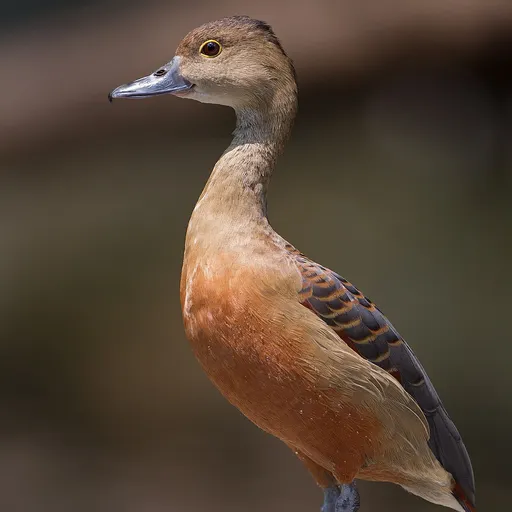
Lesser Whistling Duck
Dendrocygna javanica
Least Concern
Listen
XC1051833 · Ujjal Kishor De · Ambedkar College, fatikroy, Unakoti, Tripura, India · CC BY-SA 4.0
Overview
The lesser whistling duck (Dendrocygna javanica), also known as the Indian whistling duck, is a species of whistling duck that breeds in the Indian subcontinent and Southeast Asia. It is a largely resident species distributed widely across lowland wetlands and is currently listed as Least Concern on the IUCN Red List.
Identification
- Chestnut brown plumage with a distinct chestnut rump, differentiating it from the fulvous whistling duck.
- Long neck with an orange to yellow ring around the eye and a dark crown; sexes are alike in appearance.
- Nocturnal habits mean they are often seen resting in flocks around lakes and wet paddy fields during the day.
- Produces a loud, repetitive wheezy two-note call, often described as a 'seasick' sound, particularly while circling overhead.
Habitat
Found in freshwater wetlands with good vegetation cover across the Indian subcontinent and Southeast Asia, including islands such as the Andamans, Nicobars, and Maldives. They often rest on the banks of these wetlands or on the open sea in coastal areas, and large numbers sometimes occur in urban wetlands like those in Kolkata and Goa.
Diet
These birds feed mainly on plants taken from the water and grains from cultivated rice, alongside small fish, frogs, and invertebrates such as molluscs and worms. They forage by dabbling and diving in water and are noted as nocturnal feeders.
Did you know?
Young birds may sometimes be carried on the backs of their parents. The species has become so tame in captivity that individuals in the USA have been observed walking about and responding to whistles, with some living for up to nine years.
Sources
- Wikipedia · CC BY-SA 4.0
- Wikidata · CC0 1.0