
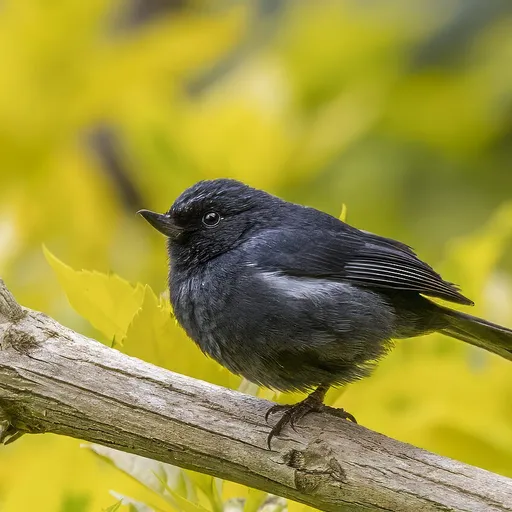
White-sided Flowerpiercer
Diglossa albilatera
Least Concern
Listen
XC923329 · JUAN ANTONIO ALONSO DE JUAN · parque chicaque, Colombia · CC BY 4.0
Overview
The white-sided flowerpiercer (Diglossa albilatera) is a fairly common and widespread species within the tanager family Thraupidae. These birds possess specially adapted bills that enable them to pierce the sides of flower blossoms to access nectar.
Identification
- A small bird measuring 12.2–13.2 cm in length and weighing approximately 9.84–10.2 g, slightly larger than a black-capped chickadee.
- Males are blackish-slate overall with distinct white pectoral tufts and underwing linings that flash when the wings are flicked; females are olive-brown above and buffy-brown below with the same white markings.
- Both sexes have dark brown irises, blackish bills (sometimes paler at the base of the lower mandible), and grey legs.
Habitat
Found in Colombia, Ecuador, Peru, and Venezuela, this species inhabits subtropical or tropical moist montane forests as well as heavily degraded former forest. Its distribution includes the Andes, the coastal cordillera of northern Venezuela, and the Serranía del Perijá on the Colombia-Venezuela border.
Did you know?
The specific epithet albilatera derives from the Latin words albus (white) and lateralis (flanks), directly referencing the bird's distinctive white sides.
Sources
- Wikipedia · CC BY-SA 4.0
- Wikidata · CC0 1.0