
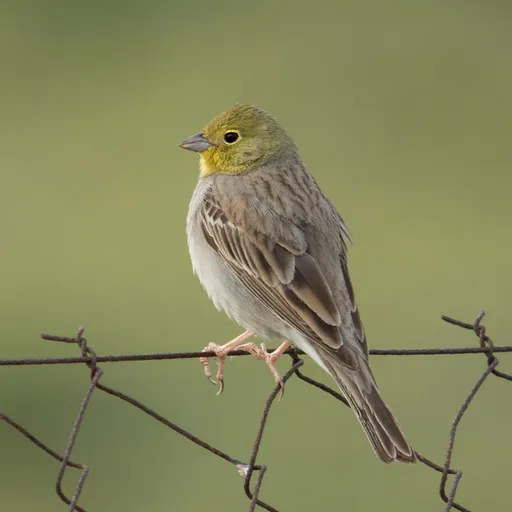
Cinereous Bunting
Emberiza cineracea
Near Threatened
Overview
The cinereous bunting (Emberiza cineracea) is a large, slim passerine bird in the family Emberizidae, first described by Christian Ludwig Brehm. It is currently listed as Near Threatened by the IUCN due to declining populations and habitat loss.
Identification
- Large and slim body, 16.5–18 cm long, with a long, white-cornered tail.
- Thick, pale bill and greyish back with subdued dark markings; wings have a browner tint.
- Adult males have a dull yellow head with a brighter moustachial line and throat; eastern subspecies has yellow underparts, while the nominate race has grey underparts.
- Females are brownish-grey above with a whitish throat and yellow moustachial stripe; song is a hoarse 'zru- zru-zru-zru'.
Habitat
Breeds on dry, rocky slopes and uplands in southern Turkey and southern Iran, where shrubby vegetation and occasional conifers provide cover. Winters in dry, open country including semi-deserts and coastal scrub in north-eastern Africa and Yemen. Small isolated populations persist on Greek islands in the Aegean Sea.
Diet
Feeds principally on seeds, consistent with other buntings. Insects are taken especially when feeding young. Normal clutch size is three eggs.
Did you know?
Despite being a primarily Asian and North African species, a few isolated populations maintain a foothold within European borders on Greek islands in the Aegean Sea, notably Lesbos.
Sources
- Wikipedia · CC BY-SA 4.0
- Wikidata · CC0 1.0