
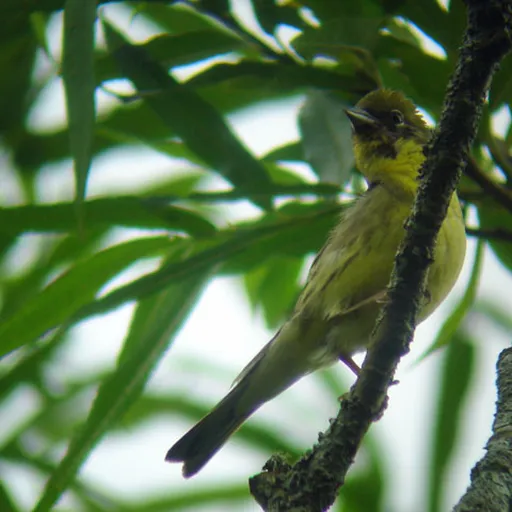
Yellow Bunting
Emberiza sulphurata
Least Concern
Overview
The yellow bunting, also known as the Japanese yellow bunting (Emberiza sulphurata), is a passerine bird native to eastern Asia. It is currently classified as least concern by the IUCN, though it faces threats from habitat loss, pesticide use, and trapping for the cagebird trade.
Identification
- A 14 cm long bird with a conical, grey bill, pinkish-brown feet, and brown eyes.
- Males feature grey-green upperparts with black streaks on the back, and yellow-green underparts that are brightest on the throat and belly.
- Distinctive markings include black lores, a narrow black chin, a pale eye ring, white outer tail feathers, and two wing bars formed by pale tips on the median and greater wing coverts.
- Females resemble males but are paler and lack the black lores and chin.
- Vocalisations consist of a twittering song and a soft 'tsip' call.
Habitat
Breeding occurs exclusively in Japan, primarily on the island of Honshū and possibly Kyushu, within forest and woodland habitats at elevations between 600 and 1500 metres. During winter, the species occupies woodland, scrub, grassland, and farmland in warmer regions of Japan or migrates further south to areas such as the Philippines, Taiwan, and south-east China.
Did you know?
The common name 'yellow bunting' can also refer to the yellowhammer (Emberiza citrinella), a distinct species.
Sources
- Wikipedia · CC BY-SA 4.0
- Wikidata · CC0 1.0