
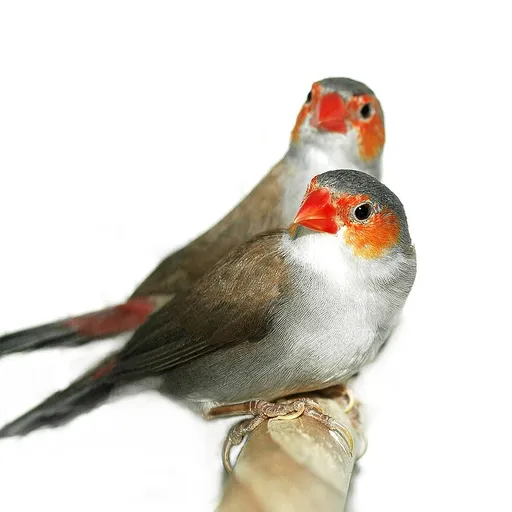
Orange-cheeked Waxbill
Estrilda melpoda
Least Concern
Overview
The orange-cheeked waxbill (Estrilda melpoda) is a common estrildid finch native to western and central Africa, with an estimated global extent of occurrence of 3,600,000 km². The species is classified as Least Concern on the IUCN Red List.
Identification
- High-pitched peeps serve as the best auditory clue to their presence.
- Males usually exhibit brighter orange patches on the abdomen.
- Fledglings resemble their parents but possess duller orange ear coverts for the first few months after leaving the nest.
Habitat
Native to the Guineo-Congolian region and northern Subsaharan areas, the species inhabits open grassland with light tree or shrub coverage, dry savannah habitats, and subtropical or tropical lowland wet shrubland. They are also frequently found along watercourses, in gardens, and in cultivated fields. The species has been introduced to Puerto Rico, Saipan, Singapore, and southern California.
Diet
The primary diet consists of tiny grass seeds collected from the ground or harvested directly from grass panicles, often while hanging upside down on stems. During the breeding season, they supplement this diet with small insects such as termites, aphids, and gnats.
Did you know?
These birds exhibit highly acrobatic behaviour when feeding, often climbing up and down vertical stems and hanging upside down to harvest seeds.
Sources
- Wikipedia · CC BY-SA 4.0
- Wikidata · CC0 1.0