
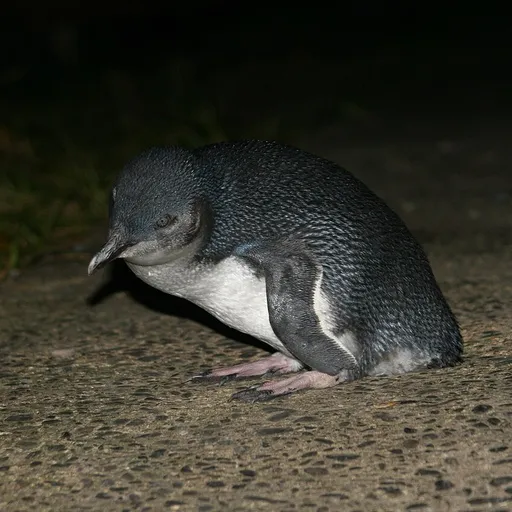
Little Penguin
Eudyptula minor
Least Concern
Overview
The little penguin (Eudyptula minor) is the smallest species of penguin in the world, native to New Zealand and Australia. It is commonly known as the fairy penguin, little blue penguin, or by its Māori name, kororā. This species is classified as Least Concern on the IUCN Red List.
Identification
- Stands between 30 and 33 cm tall and weighs an average of 1.5 kg.
- Head and upper parts are slate-blue, fading to white on the chin, belly, and underparts.
- Features a dark grey-black beak measuring 3–4 cm long, pale silvery- or bluish-grey irises, and pink feet with black soles.
- Immature individuals possess a shorter bill and lighter upperparts compared to adults.
Habitat
The little penguin is a marine neritic species that is native to New Zealand and Australia, with its main range located in Australasia. It inhabits coastal areas where it returns to burrows on the shore at dusk after foraging in the sea. In Australia, colonies primarily exist on offshore islands protected from terrestrial predators, while New Zealand populations are often smaller and fragmented due to the coastline's structure.
Diet
Little penguins forage by diving to catch small clupeoid fish, cephalopods, and crustaceans, often travelling to the sea floor. A Victorian population study identified a diet consisting of 76% fish and 24% squid, with pilchard and anchovy being the dominant fish species. In New Zealand, important prey items include arrow squid, slender sprat, and red cod.
Did you know?
Little penguin feathers are dense in melanosomes, which increase water resistance and provide their unique blue colour. They may also double brood by laying a second clutch of eggs after the first has successfully fledged, a behaviour potentially linked to increasing sea surface temperatures.
Sources
- Wikipedia · CC BY-SA 4.0
- Wikidata · CC0 1.0