
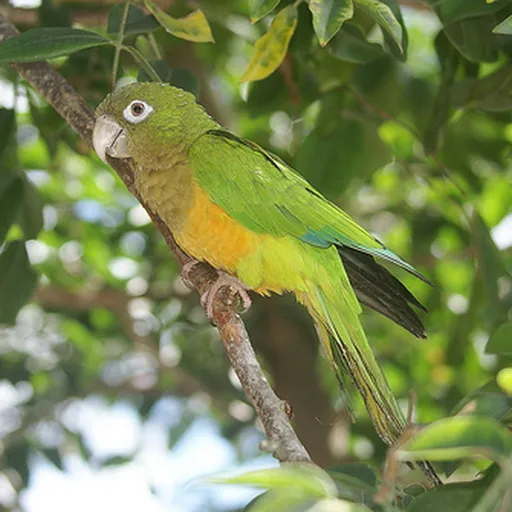
Caatinga Parakeet
Eupsittula cactorum
Least Concern
Overview
The Caatinga parakeet, also known as the cactus parakeet or cactus conure, is a species of bird in the family Psittacidae that is endemic to eastern Brazil. Assessed as Least Concern by the IUCN, it is the most common parrot in some parts of its range, though it faces habitat degradation.
Identification
- Approximately 25 cm long with sexes that are alike.
- Nominate adults feature a pale brown forecrown, cheeks, throat, and breast, with yellow-orange belly and vent areas.
- Nape, ear coverts, upperparts, and tail are green, while wings are mostly green with bluish flight feathers.
- Flight calls include high-pitched screeching 'scraart scraart' cries, softer 'tchit tchit' sounds, and loud 'cherr-chee' notes.
Habitat
Found in eastern and northeastern Brazil, this species inhabits pristine and second-growth caatinga, a dry landscape characterised by thorny vegetation, shrubs, and succulents. It also occurs in cerrado and moister woodlands.
Diet
The diet consists of fruits from figs, cactus, and other plants, as well as flower buds. It is also known to feed on crops such as rice, maize, and sorghum.
Did you know?
The species typically excavates its nests in arboreal termitaria, with wild nests sometimes containing up to six eggs.
Sources
- Wikipedia · CC BY-SA 4.0
- Wikidata · CC0 1.0