
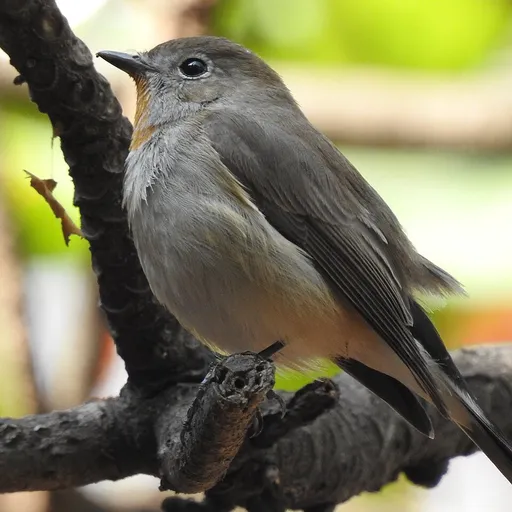
Taiga Flycatcher
Ficedula albicilla
Least Concern
Overview
The taiga flycatcher, also known as the red-throated flycatcher, is a migratory bird in the family Muscicapidae. It was first described by Peter Simon Pallas in 1811 and is currently classified as Least Concern on the IUCN Red List.
Identification
- Females have brown upper parts with a blackish tail flanked by white, buffish breasts, and mostly white underparts.
- Males feature blue-tinged grey ear coverts and sides of the neck, with breeding males displaying orange-red coloration on the throats.
- Can be distinguished from the similar red-breasted flycatcher by the brown tail of its female and the fact that red colouring in breeding males does not extend to the breast.
Habitat
Breeding occurs in northern Eurasia, ranging from eastern Russia to Siberia and Mongolia, within taiga forests. The species is a winter visitor to South and South-east Asia, including countries such as Bangladesh, Bhutan, India, and Japan. It is occasionally recorded as a rare vagrant to western Europe.
Did you know?
The specific name albicilla derives from Latin albus meaning white and Neo-Latin cilla meaning tail, a usage that arose from a misunderstanding of the wagtail name motacilla.
Sources
- Wikipedia · CC BY-SA 4.0
- Wikidata · CC0 1.0