
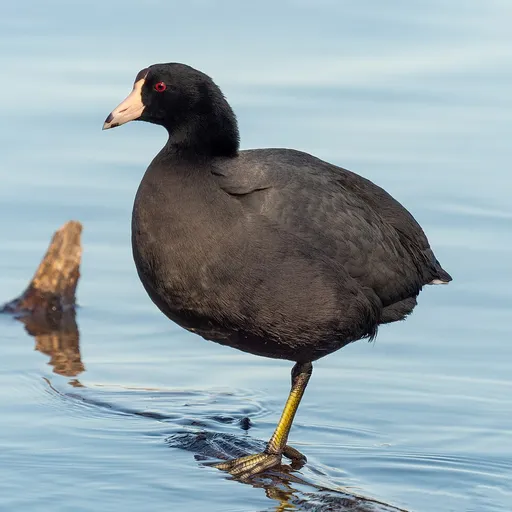
American Coot
Fulica americana
Least Concern
Overview
The American coot (Fulica americana), also known as a mud hen, is a migratory bird of the family Rallidae that is often mistaken for a duck but belongs to a separate order. It inhabits wetlands and open water bodies across North America, where it builds floating nests and lays clutches of 8–12 eggs.
Identification
- Adults feature a white frontal shield with a reddish-brown spot near the top of the bill between the eyes, alongside a short, thick white bill.
- The bird measures 34–43 cm in length, with males generally larger than females and both sexes possessing broad, lobed scales on their feet rather than webbing.
- Vocalisations include distinct alarm calls: males emit a puhlk while females produce a poonk.
Habitat
This species prefers freshwater environments such as reed-ringed lakes, open marshes, and sluggish rivers, though it may temporarily inhabit saltwater during winter. Its breeding range extends from southern Quebec to the Pacific coast of North America and north South America, with winter populations reaching as far south as Panama.
Diet
The American coot is omnivorous, eating primarily aquatic vegetation such as algae, but also consuming arthropods, fish, and other aquatic animals when available. During the breeding season, parents focus on feeding aquatic insects and mollusks to their chicks, and adults are capable of diving for food or scavenging on land.
Did you know?
Mothers preferentially feed offspring with the brightest plume feathers, which has resulted in coot chicks having brightly ornamented plumage that becomes drabber as they age. Additionally, the species has evolved the rare ability to recognise and reject conspecific brood parasitism by imprinting on the cues of their first-hatched chick to discriminate against intruders.
Sources
- Wikipedia · CC BY-SA 4.0
- Wikidata · CC0 1.0