
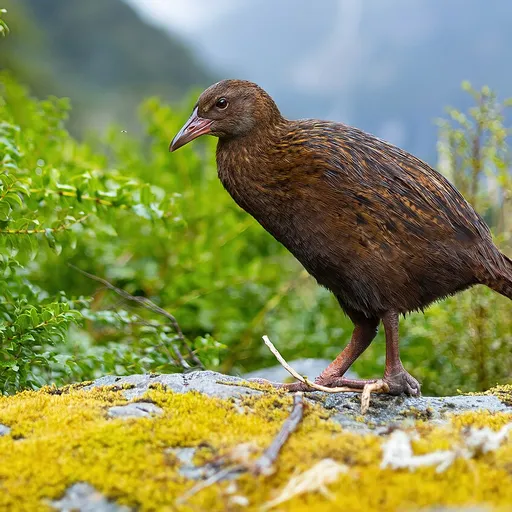
Weka
Gallirallus australis
Vulnerable
Listen
XC600354 · craig wilson · Marlborough District, Marlborough, New Zealand · CC BY 4.0
Overview
The weka, also known as the Māori hen or woodhen, is a flightless bird species of the rail family endemic to New Zealand. It is currently classified as a vulnerable species by the IUCN Red List.
Identification
- Sturdy brown birds about the size of a chicken, predominantly rich brown mottled with black and grey.
- Males measure 50–60 cm in length, while females are smaller at 46–50 cm.
- Possess a relatively large, reddish-brown beak that is stout and tapered.
- Characterised by sturdy legs, reduced wings, and a pointed tail that is near-constantly being flicked.
Habitat
Weka occupy a variety of environments including forests, sub-alpine grassland, sand dunes, rocky shores, and modified semi-urban environments. They are distributed across the North and South Islands of New Zealand, with four subspecies recognised, though genetic evidence supports only two distinct lineages.
Diet
As omnivores, weka feed on a diet comprising 30% animal foods and 70% plant foods, including earthworms, larvae, beetles, wētā, leaves, grass, berries, and seeds. They are important seed dispersers in the bush, distributing seeds too large for smaller berry-eating birds. Their furtive curiosity leads them to search around houses and camps for food scraps or unfamiliar, transportable objects, particularly shiny ones.
Did you know?
Weka are known to take shiny objects and have a feisty, bold personality that has made them relatively easy to catch, a trait significant to some Māori iwi. In October 2023, two individuals were disqualified from a reality show for killing and eating a weka, despite knowing it was a protected species.
Sources
- Wikipedia · CC BY-SA 4.0
- Wikidata · CC0 1.0