
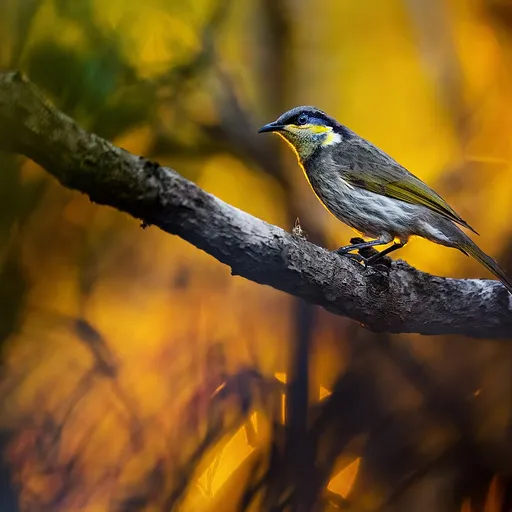
Mangrove Honeyeater
Gavicalis fasciogularis
Least Concern
Overview
The mangrove honeyeater (Gavicalis fasciogularis) is a small to medium-sized nectar-feeding bird endemic to the eastern coast of Australia. It belongs to the family Meliphagidae and is currently classified as Least Concern by the IUCN.
Identification
- Small to medium-sized bird with olive-brown plumage above, grading to greyish-brown on the rump, and a dark-grey back.
- Features a broad black mask extending down the side of the neck, a narrow yellow moustachial stripe ending in a white tuft, and a large greyish-white patch on the lower side of the neck.
- The slightly down-curved bill is dark-grey, legs are dark grey or bluish-grey, and irises are dark blue-grey.
- Produces a loud, melodious, and ringing song that varies, described as scolding chatter, with examples such as "whit-u-we-u".
Habitat
Restricted to the eastern coast of Australia from Townsville in Queensland to northern New South Wales, with a range that has been expanding southward. It is found mainly in mangrove forests and woodlands fringing coasts, bays, estuaries, and islands, though it also frequents coastal shrubland, woodland, and scrub near mangroves. Regular visitors to parks and gardens in towns near mangroves are also common.
Diet
Feeds primarily on nectar and invertebrates, including insects, marine snails, and crabs, and sometimes fruit. Forages mainly in Aegiceras and Rhizophora mangroves among outer foliage, flowers, trees, and shrubs. Also consumes honeydew, manna, lerp, and sap from gliding possum damage.
Did you know?
The species has been implicated in the spread of the noxious weed Bridal Creeper (Asparagus medeoloides) due to its ability to fly over open agricultural lands.
Sources
- Wikipedia · CC BY-SA 4.0
- Wikidata · CC0 1.0