
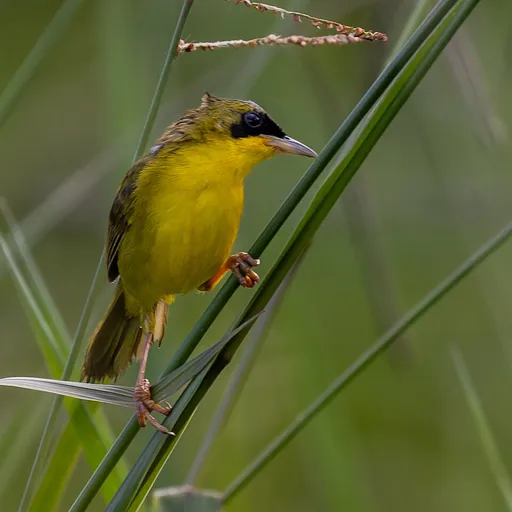
Masked Yellowthroat
Geothlypis aequinoctialis
Least Concern
Overview
The masked yellowthroat (Geothlypis aequinoctialis) is a species of bird in the family Parulidae, commonly known as New World warblers. It is currently classified as monotypic, with taxonomic revisions having separated former subspecies into distinct species such as the black-lored and southern yellowthroats.
Identification
- Males display a wide black mask extending from the forehead around the eye, contrasting with a pale slate-gray crown and bright yellow underparts.
- Females lack the black or gray head markings, featuring dull yellow lores and browner, more subdued upperparts.
- Adults measure 12.7 to 14 cm in length and weigh between 11 and 15 g, possessing a blackish maxilla, pinkish horn mandible, and pinkish to yellowish legs.
- Males sing a short sweet warble transcribed as "tee-chee-chee teecheweet teecheweet" and produce a long melodious call of approximately twenty descending notes.
Habitat
The species inhabits damp to wet landscapes, including grasslands, marshy thickets, forest edges, seasonally flooded savannas, and the shores of the Amazon, as well as human-modified areas like sugar cane and oil palm plantations. It has a disjunct distribution covering parts of Colombia, Venezuela, the Guianas, and northern Brazil, as well as Trinidad.
Diet
The diet consists almost entirely of small invertebrates, including caterpillars, dragonflies, damselflies, grasshoppers, beetles, and spiders. The bird forages singly or in pairs within dense vegetation, taking prey primarily by gleaning.
Did you know?
Nests are exclusively documented in Trinidad, where the female alone incubates a clutch of three to five white eggs with darker flecks for approximately thirteen days before fledging occurs about ten days after hatching.
Sources
- Wikipedia · CC BY-SA 4.0
- Wikidata · CC0 1.0