
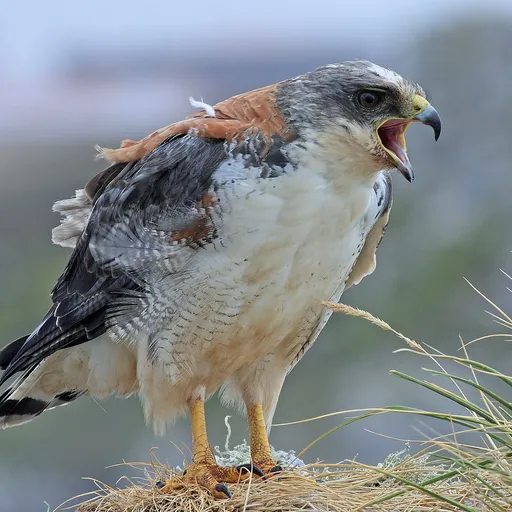
Variable Hawk
Geranoaetus polyosoma
Least Concern
Overview
The variable hawk, Geranoaetus polyosoma, is a polymorphic bird of prey within the family Accipitridae. As its common name implies, it exhibits remarkable variation in both size and colouration, with at least 27 distinct adult plumages recorded. It is currently classified as Least Concern on the IUCN Red List.
Identification
- Lengths range from 45 to 62 cm and wingspans from 113 to 151 cm, rating it as a large Buteo.
- Adults possess a white tail with a contrasting black subterminal band and grey wings that are barred dark.
- Plumage varies significantly, ranging from very dark grey to whitish, with some individuals displaying reddish-brown underparts or backs.
- The exsul subspecies is less variable, appearing whitish below and grey above in both sexes.
Habitat
Widespread and often common in open habitats across western and southern South America, including the Falkland Islands. This species occupies a broad range of environments, from Pacific coastal foothills and Patagonian steppes to high-elevation páramo and puna habitats above tree line. They are also found in agricultural areas, beech woods, and the volcanic slopes of the Juan Fernández Islands.
Diet
Variable hawks prey on almost any small to medium-sized animal that can be caught, with small mammals comprising over 90% of the diet in some studies. Common prey includes cavies, tuco-tucos, rabbits, mice, páramo rats, earthworms, weevils, orthopterans, frogs, lizards, snakes, fish, and occasionally birds. Hunting typically involves spotting prey while soaring on thermals and then pinning it to the ground.
Did you know?
With at least 27 distinct adult plumages known, this species may possess more plumage variations than any other raptor. These extensive morphological differences show no relationship to morphometric variables and only minor geographic variation.
Sources
- Wikipedia · CC BY-SA 4.0
- Wikidata · CC0 1.0