
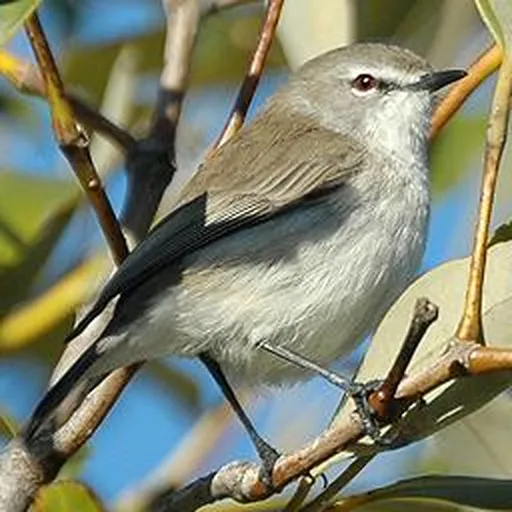
Mangrove Gerygone
Gerygone levigaster
Least Concern
Overview
The mangrove gerygone, also known as the mangrove warbler, is a small bird in the Australian warbler family Acanthizidae. It is thought to form a superspecies with the fan-tailed gerygone and the western gerygone.
Identification
- Small bird measuring 9–11 cm in length and weighing 6 g with rounded wings.
- Plumage is grey above with a white throat, belly, flanks, and rump, featuring a distinct white eye stripe.
- Black bill and legs with a red iris.
- Song is described as "sweet, rich, tuneful" and similar to that of the western gerygone.
Habitat
Principally distributed in mangrove forests and adjacent forests and woodland, ranging from coastal Western Australia to New South Wales and southern New Guinea. In the Kimberley region, it may be displaced from mangroves by the large-billed gerygone to scrubland dominated by paperbarks and acacia.
Diet
Feeds on insects such as beetles, grasshoppers, wasps, ants, and moths within tree foliage. It mostly forages in the canopy but will also feed amongst mangrove roots and often joins mixed-species flocks with white-eyes, honey-eaters, and fantails.
Did you know?
The nest is an oval dome constructed from an eclectic mix of roots, grass, spider webs, moss, seaweed, and bark. It hangs from mangroves and is subject to brood parasitism by cuckoo species.
Sources
- Wikipedia · CC BY-SA 4.0
- Wikidata · CC0 1.0