
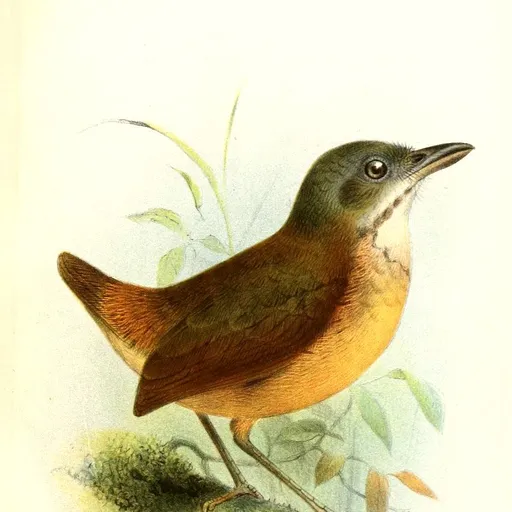
Plain-backed Antpitta
Grallaria haplonota
Least Concern
Listen
XC250878 · Niels Krabbe · Napo: V.Sumaco: 1 km S "Wild Sumaco Lodge", Ecuador · CC BY-SA 4.0
Overview
The plain-backed antpitta (Grallaria haplonota) is a species of bird in the family Grallariidae. It is found in Colombia, Ecuador, Peru, and Venezuela, and is classified as Least Concern by the IUCN Red List.
Identification
- A plump, round bird measuring 16 to 17 cm (6.3 to 6.7 in) in length, with a stout bill and a very short tail.
- Adults of the nominate subspecies feature brown upperparts with a gray tinge on the crown, a dark rufescent tail, and an otherwise brown face with a pale buff moustache and a dusky stripe below it.
- The chin and throat are white, while the underparts are ochraceous, being darkest on the breast.
- It has a dark brown iris, a black maxilla, a brownish horn mandible, and gray legs and feet.
- The song is a slow, measured series of approximately 5-9 low, hollow notes that rise slightly in the middle.
Habitat
It inhabits the floor and understory in the interior and edges of humid to wet montane forest, favoring areas along creeks, on steep slopes, and regrowing openings such as those caused by treefall. The species has a highly disjunct distribution with four subspecies, none of whose ranges touch the others, spanning elevations between 700 and 1,950 m.
Diet
The plain-backed antpitta feeds on small invertebrates, including insects, spiders, worms, and snails. It forages highly terrestrially, walking and hopping on the forest floor, pausing, and often stabbing into soft soil to find earthworms.
Did you know?
The only known nest was a hemisphere with a side entrance made of sticks and placed on the ground, which contained two eggs.
Sources
- Wikipedia · CC BY-SA 4.0
- Wikidata · CC0 1.0