
Black-necked Crane
Grus nigricollis
Near Threatened
Overview
The black-necked crane (Grus nigricollis) is a medium-sized crane native to Asia, currently classified as Near Threatened on the IUCN Red List. It is culturally significant in Buddhist traditions and holds special status as the state bird of the Indian union territory of Ladakh.
Identification
- 139 cm long with a 235 cm wingspan and a weight of 5.5 kg.
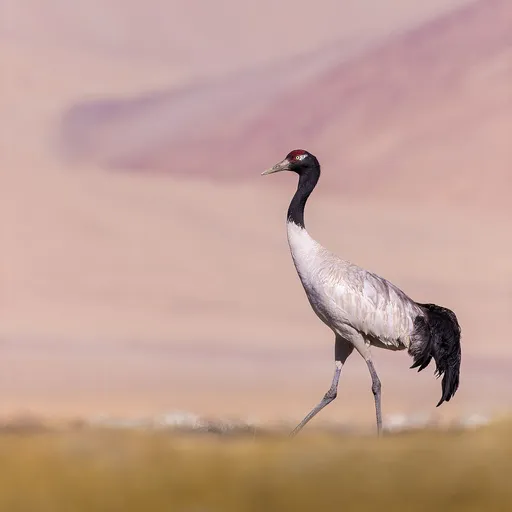
- Mostly whitish-grey plumage with a black head and upper neck.
- Features naked, dull red lores and crown, along with a distinct white patch behind the eye.
- Black tail, which helps distinguish it from the similar-looking common crane that has a grey tail.
- Loud trumpeting calls similar to other crane species.
Habitat
Breeding areas consist of high-altitude alpine meadows, lakeside and riverine marshes, and river valleys on the Tibetan Plateau, often utilizing nearby barley and wheat fields. Wintering grounds are typically found in sheltered valleys or at lower altitudes, with the largest populations located in China and smaller numbers in Vietnam, Bhutan, and India.
Diet
These birds forage on the ground in small groups, feeding on sedge tubers, plant roots, earthworms, insects, frogs, and small vertebrates. They also consume fallen grains of barley, oats, and buckwheat, and sometimes dig up and eat root vegetables such as potatoes, carrots, and turnips.
Did you know?
The cranes are capable of distinguishing between people wearing traditional local dress and strangers, showing particular wariness towards the latter.
Sources
- Wikipedia · CC BY-SA 4.0
- Wikidata · CC0 1.0