
Mao
Gymnomyza samoensis
Endangered
Overview
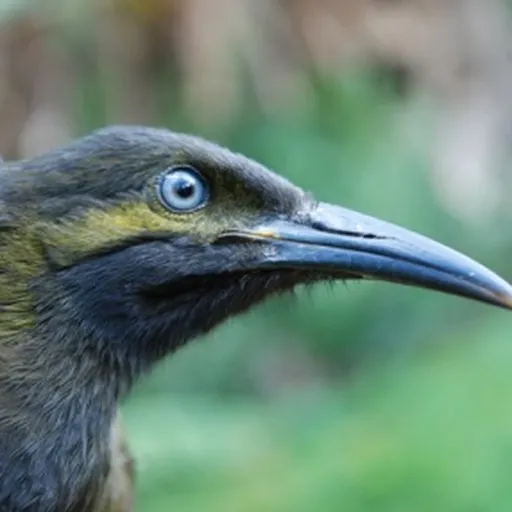
The mao, or maʻomaʻo (Gymnomyza samoensis), is a large, endangered passerine bird in the honeyeater family endemic to the Samoan Islands. It is classified as Endangered by the IUCN Red List, with a population estimated between 250 and 999 individuals that is currently declining.
Identification
- A large honeyeater measuring 28–31 cm in length, with dark plumage ranging from blackish on the head and breast to olive-green on the wings and body.
- Possesses a long, curved black bill in adults, whereas chicks and juveniles have yellowish bills.
- Features a distinct dark greenish mark under the eye, with light blue or brown eyes in adults and brown irises in all juveniles.
- Characteristically bobs its tail while foraging along tree trunks and branches.
Habitat
The species normally inhabits mountain forests but has also been recorded in scrub and coastal coconut trees. It is found on the islands of Upolu and Savaiʻi in Independent Samoa, though it is now locally extinct on Tutuila Island in American Samoa.
Diet
The mao forages by moving along the trunks and branches of trees, where it bobs its tail. It consumes small vertebrates, such as geckos, as well as insects.
Did you know?
The mao makes loud whistling and mewing calls, most often before dawn and around dusk, and breeding pairs engage in complex duets. Juveniles remain in the core breeding territory for 2–2.5 months after fledging, following the female and making loud begging calls while she continues to feed them.
Sources
- Wikipedia · CC BY-SA 4.0
- Wikidata · CC0 1.0