
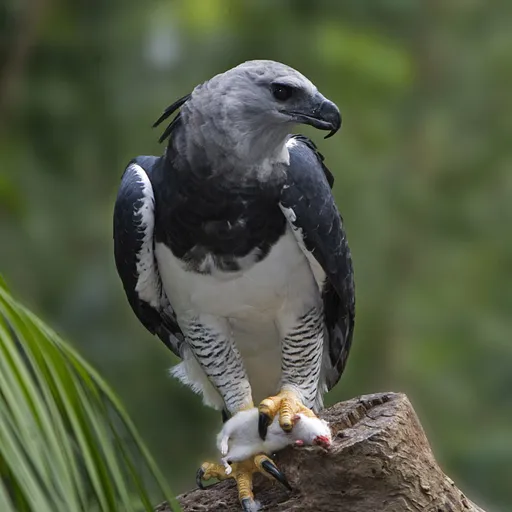
Harpy Eagle
Harpia harpyja
Vulnerable
Overview
The harpy eagle (Harpia harpyja) is a large neotropical raptor and the largest bird of prey in its range, though it is among the largest extant eagle species globally. It is currently classified as Vulnerable on the IUCN Red List due to habitat destruction, which has caused it to vanish from parts of its former range.
Identification
- Slate-black upperside with a mostly white underside, separated by a broad black band across the upper breast.
- Pale grey head featuring a distinctive double crest, with a black or blackish bill and cere.
- Yellow tarsi and toes with black-striped feathered tarsi; tail is black with three grey or white bands depending on the angle.
- Largest talons of any living eagle, with female talons averaging 12.3 cm (4.8 in).
- Largely silent away from the nest, but adults produce penetrating, weak, melancholy screams when near the nest.
Habitat
This species primarily inhabits tropical lowland rainforests, typically operating in the upper emergent canopy layer. Its range extends from southern Mexico through Central America to as far south as Argentina, where it is most common in Brazil. Although generally absent from disturbed areas, it may occasionally fly over forest borders in varied habitats such as cerrados, caatingas, and cities.
Diet
As an apex predator, it preys mostly on tree-dwelling mammals, particularly sloths, which account for up to 79% of its diet in some regions. Monkeys, including capuchins, spider monkeys, and howler monkeys, are also major food items, alongside other mammals like agoutis, armadillos, and occasionally domestic livestock. The eagle employs perch hunting or sit-and-wait strategies, using its massive talons to carry prey items weighing up to half its own body weight.
Did you know?
The common name 'harpy' is derived from the harpies of Ancient Greek mythology, which were wind spirits with the heads of women and the talons of raptors, believed to carry the dead to Hades or Tartarus.
Sources
- Wikipedia · CC BY-SA 4.0
- Wikidata · CC0 1.0