
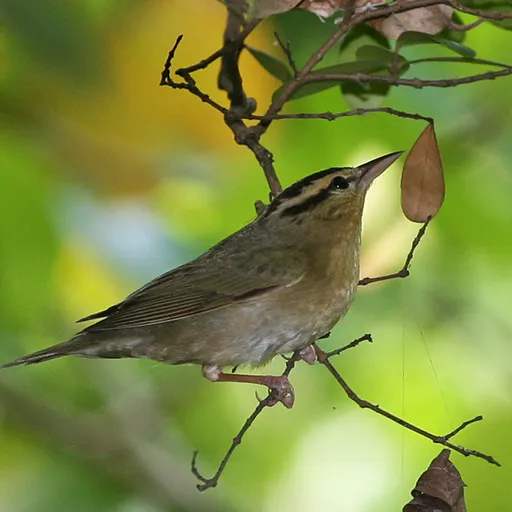
Worm-eating Warbler
Helmitheros vermivorum
Least Concern
Overview
The Helmitheros vermivorum is a small New World warbler that breeds in the Eastern United States and migrates to southern Mexico, the Caribbean, and Central America for the winter. It is the only species in the genus Helmitheros and is currently classified as Least Concern on the IUCN Red List.
Identification
- Small bird approximately 13 cm in length with olive-brown upperparts and light-coloured underparts.
- Distinctive black and light brown stripes on the head, which appear brownish in immature birds.
- Features a slim, pointed bill and pink legs.
- Males produce a short, high-pitched trill as a song, while their call sounds like a chip or tseet.
Habitat
In much of their range, these birds are associated with mature hardwood forests on steep slopes in the Eastern United States, though recent shifts show coastal populations frequently utilising pine plantations with dense shrubby midstory. They breed in dense deciduous forests and nest on the ground, whereas in winter they occupy both scrub and moist forests, particularly along the Caribbean Slope. Frequent fires or management strategies that reduce shrub structure negatively impact this species.
Diet
The diet of this species varies by habitat, involving gleaning arthropods from live foliage on breeding grounds and insects from dead plant material in winter. The name "worm-eating" refers to the numerous Lepidopteran larvae they consume, although they rarely or never eat earthworms. Pesticide use poses a threat by decreasing their primary food source of insects.
Did you know?
Despite its name, the worm-eating warbler rarely, if ever, eats earthworms; instead, the name refers to the numerous Lepidopteran larvae it consumes. Its genus name, Helmitheros, combines Ancient Greek words meaning "worm" and "hunter".
Sources
- Wikipedia · CC BY-SA 4.0
- Wikidata · CC0 1.0