
Harlequin Duck
Histrionicus histrionicus
Least Concern
Overview
The harlequin duck (Histrionicus histrionicus) is a small sea duck that takes its name from the colourfully dressed character in Italian commedia dell'arte theatre. It is the only extant species in the genus Histrionicus and is listed as Least Concern on the IUCN Red List, although the eastern North American population is considered endangered.
Identification
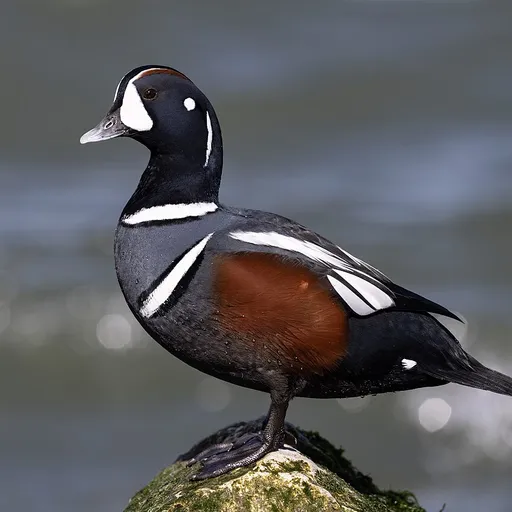
- Adult breeding males display a complex plumage with a dark slate blue head and neck featuring a large white crescent in front of the eye, chestnut patches on the crown, and a black-bordered white collar.
- The body is lighter slate blue with chestnut sides, a black tail, and a metallic blue speculum.
- Adult females are less colourful, showing brownish-grey plumage with three distinct white patches on the head: a round spot behind the eye, a larger patch from the eye to the bill, and a small spot above the eye.
Habitat
Breeding habitats consist of cold, fast-moving streams in northwestern and northeastern North America, Greenland, Iceland, and eastern Russia, where nests are situated in well-concealed ground locations near water. They are usually found near pounding surf and white water, and most individuals winter near rocky shorelines on the Atlantic and Pacific coasts.
Diet
These birds feed by swimming underwater, diving, or dabbling, consuming molluscs, crustaceans, and insects. Their smooth, densely packed feathers trap air to insulate small bodies against chilly waters and provide exceptional buoyancy, causing them to bounce like corks after dives.
Did you know?
Harlequin ducks adhere to a monogamous mating system and form multi-year pair bonds during the winter mating season, though males rarely participate in paternal care. Both sexes demonstrate mate choice preference and pair-bond defense to show fidelity, with the uncommon ability to 'divorce' a partner to pursue a higher-quality option.
Sources
- Wikipedia · CC BY-SA 4.0
- Wikidata · CC0 1.0