
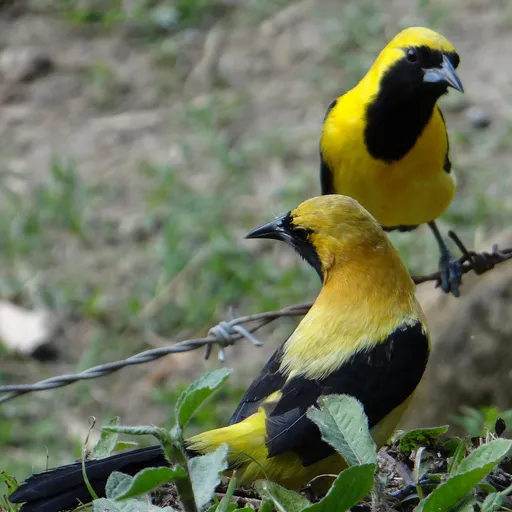
Yellow-backed Oriole
Icterus chrysater
Least Concern
Listen
XC719904 · Hugo Oliveros-Salas · Santa Marta, Magdalena, Vereda Bellavista, Casa Café Hospedaje, Colombia · CC0 1.0
Overview
The yellow-backed oriole is a medium-sized bird belonging to the family Icteridae. It is classified as Least Concern on the IUCN Red List. This species is found throughout Central and northern South America.
Identification
- Bright yellow body with contrasting black wings, tail, shoulders, throat, and face in adult males; females are similar but with slightly greenish yellow parts.
- Medium-sized at approximately 21.5 cm in length, with a black bill that is bluish-grey at the base in adults.
- Clear, whistling song consisting of a series of notes, which can sound muddy or warbled in southern Central American populations.
- Immature birds are greener and possess an olive eye-line, distinguishing them from adult females.
Habitat
Yellow-backed orioles tolerate a wide variety of habitats but prefer open, mixed pine-oak woodlands and dry scrub forest. They are also found in banana plantations and occasionally in lowland deciduous forests. The species typically resides at altitudes below 900 m, though populations in Central and South America may occur up to 3,000 m.
Diet
Primarily insectivorous, feeding on caterpillars, wasps, ants, weevils, and other arthropods. The diet is often augmented with bananas and nectar from balsa and Heliconia plants. Insects are hunted by probing tree bark and epiphyte leaves, and the bird may puncture unopened flowers to access nectar.
Did you know?
Nests are shallow, springy baskets woven from fine grasses, usually attached to the tips of palm fronds in the canopy of mature trees. Both sexes sing, a trait that appears common to orioles breeding in tropical climates.
Sources
- Wikipedia · CC BY-SA 4.0
- Wikidata · CC0 1.0